

Photo: Koda6029, Wikimedia Commons (CC BY-SA 4.0) / Leaf-strewn chain section on Mt. Taihaku

Late-Autumn Hiking Gloves Guide: Why Fingers Go Numb First, 3-Layer Glove Systems, Spare Pairs, Hand Warmers, and Frostbite Signs
Even when autumn foliage is at its peak in the valleys, October and November ridges in Japan drop near or below freezing. Learn the physiology of cold hands (the 15°C skin-temperature threshold), how to estimate summit wind chill, how to layer liner, insulation, and shell gloves, and how to use disposable hand warmers safely.
Key Takeaway: Pack at Least Two Pairs of Gloves for Late-Autumn Day Hikes
From mid-October onward in Japan, valley trailheads may still glow with autumn leaves while upper ridges drop below freezing in the early morning and late afternoon. As Nagano Prefecture's Autumn Mountain Safety Advisory (PDF) warns, autumn ridges experience sub-zero morning and evening temperatures, and every 1 m/s increase in wind speed lowers the perceived temperature by roughly 1°C.
Your hands are almost always the first part of the body to suffer in the cold. Once your fingertips go numb, operating jacket zippers, pack buckles, smartphones, and chain sections becomes clumsy and hazardous. For late-autumn day hikes, build your handwear around three simple rules:
- Active Hiking Pair: One pair of thin-to-midweight five-finger gloves with good grip and touchscreen compatibility that you can put on and take off as you move.
- Warm Spare Pair: A second, warmer pair (fleece, synthetic insulation, or mittens) stored in a waterproof bag inside your pack for summit breaks or in case your primary pair gets wet or lost.
- Wind & Rain Protection: On ridges near or above 2,000 meters—or whenever rain or sleet is in the forecast—carry a windproof/waterproof over-glove shell.
Why Fingers Lose Dexterity First: The 15°C Skin-Temperature Threshold
When the human body senses cold, it constricts blood vessels in the extremities to preserve core temperature. Because fingers have a high surface-area-to-volume ratio and very little local muscle mass to generate heat, hand temperature drops rapidly once blood flow is reduced.
In a widely cited ergonomics review on hand function in the cold (Heus R, Daanen HAM, Havenith G., Applied Ergonomics, 1995), researchers identified the minimum physiological thresholds required to maintain normal manual dexterity:
- Local skin temperature (fingertips): ~15°C
- Nerve temperature: ~20°C
- Muscle temperature: ~28°C
Crucially, air temperature does not need to be below 0°C for your fingertip skin temperature to fall below 15°C. Cold wind, wet fabric, or gripping cold metal rocks and chains can chill your skin well above freezing. As explained in Montbell's Winter Glove Selection Guide, exposing bare hands to cold wind or continuing to wear wet gloves causes progressive stiffness and pain, followed by numbness and discoloration that signal the onset of frostbite.
Never wait until pain turns into numbness. Numbness means cold injury is progressing, not that your hands have adjusted. Add a wind shell or swap into dry gloves as soon as your fingertips feel stiff.
Estimating Summit Cold: −0.6°C per 100 m and −1°C per 1 m/s of Wind
According to the Japan Meteorological Agency's Glossary of Temperature and Humidity, air temperature in the troposphere decreases by roughly 0.5°C to 1.0°C per 100 meters of elevation (hikers typically use 0.6°C per 100 m). Combine that lapse rate with −1°C per 1 m/s of wind speed:
- If a trailhead at 600 m is 10°C in the morning, a summit at 2,000 m (+1,400 m) will be around 1.6°C ($10 - 0.6 \times 14$).
- Add a 5 m/s breeze on the exposed ridge, and the wind-chill equivalent drops to roughly −3°C.
For more on reading mountain weather charts before first snow, see our First Snow & Late-Autumn Mountain Weather Guide.
| Estimated Summit Wind Chill | Typical Late-Autumn Scenario | Active Hiking Handwear | Rest Breaks & Backup |
|---|---|---|---|
| Around 5–10°C | Low mountains (~1,000 m), sheltered forest trails with light wind | Thin or midweight gloves (stow in pocket when warm on climbs) | 1 warm spare pair in pack |
| Around 0–5°C | 1,500–2,000 m peaks, or ridges with ~5 m/s wind | Thin liner + windproof shell on exposed ridges | Add warm mid-layer/mittens at rest stops; carry spare liner |
| 0°C or below | Ridges above 2,000 m with wind, or any forecast of cold rain/sleet | Full 3-layer system ready (liner + insulation + waterproof shell) | Spare liner + insulated mittens in dry bag |
The 3-Layer Glove System: Liner, Insulation, and Shell
Just like clothing layering, mountain gloves work best as a modular three-layer system (Montbell Glove Guide, Finetrack Glove Layering Guide):
- Base Layer (Thin Liner Glove): Worn next to the skin in merino wool or moisture-wicking synthetic fabric. Prevents bare-skin contact with icy air or metal when you remove outer gloves for fine tasks, and supports touchscreen use.
- Middle Layer (Insulating Glove): Fleece, wool, or synthetic insulation that traps warm air. Adjust thickness based on elevation and temperature.
- Outer Layer (Windproof / Waterproof Over-Glove Shell): Blocks wind, rain, sleet, and abrasion while keeping your insulating layers dry.
Waterproof vs. Water-Resistant (Boteki) Shells
As Montbell's guide explains, both waterproof (bosui) and water-resistant (boteki) outer gloves may use waterproof-breathable fabrics, but only waterproof models have fully seam-taped interiors. Water-resistant models are lighter and more supple for dry, windy ridges, whereas seam-taped waterproof shells are essential in sustained cold rain or wet snow.
Material Comparison
| Material | Strengths | Limitations |
|---|---|---|
| Merino Wool | Feels warm even when slightly damp; generates adsorption heat from moisture vapor | Wind passes through easily unless paired with a shell |
| Fleece | Warm, breathable, quick-drying, and flexible | Permeable to wind unless wind-blocked or covered by a shell |
| Synthetic Insulation | High warmth-to-weight ratio; retains loft better than down when damp | Bulkier thickness reduces finger dexterity (best for rest stops/cold ridges) |
| Waterproof / Windproof Shell | Stops wind, rain, and sleet; protects inner gloves | Provides no insulation by itself; remove on steep climbs to prevent sweat buildup |
| Leather / Rubber Palm Overlays | Secure grip and abrasion resistance on chains, rocks, and trekking poles | Untreated leather absorbs water and dries very slowly |
| Cotton Work Gloves (Gunte) | Better than bare hands in an emergency on a dry low mountain | Absorbs sweat and rain, stays wet, and rapidly chills hands in cold wind |
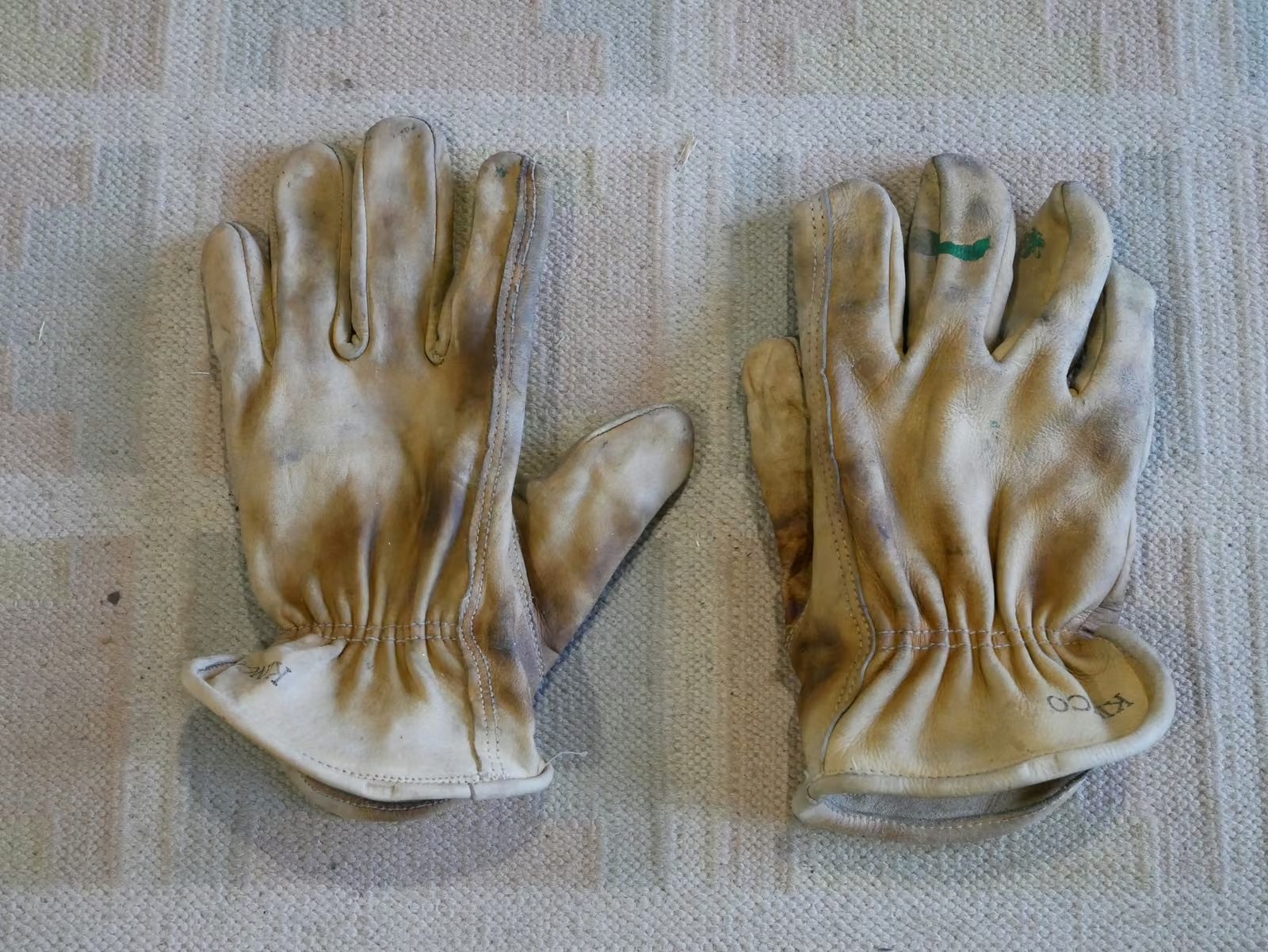

Shape and Fit: 5-Finger, Trigger-Finger, and Mittens
| Style | Warmth | Dexterity | Best Late-Autumn Use |
|---|---|---|---|
| 5-Finger Gloves | Moderate | Highest — each finger moves independently | Primary active glove for zippers, poles, chains, and phone |
| 3-Finger (Trigger / Lobster) | High | Good — thumb and index finger remain independent | Cold-handed hikers on windy ridges |
| Mittens | Highest — fingers share warmth | Low for fine tasks | Summit breaks, emergencies, and over-mittens |
Source: Montbell Winter Glove Selection Guide
Why Tight Gloves Make Your Hands Colder
Always choose a size where your fingertips do not press against the ends and the cuff/palm does not constrict circulation—even when wearing a liner underneath. According to the MSD Manual Consumer Version on Frostbite, overly tight gloves or boots that restrict blood flow are a direct risk factor for frostbite.
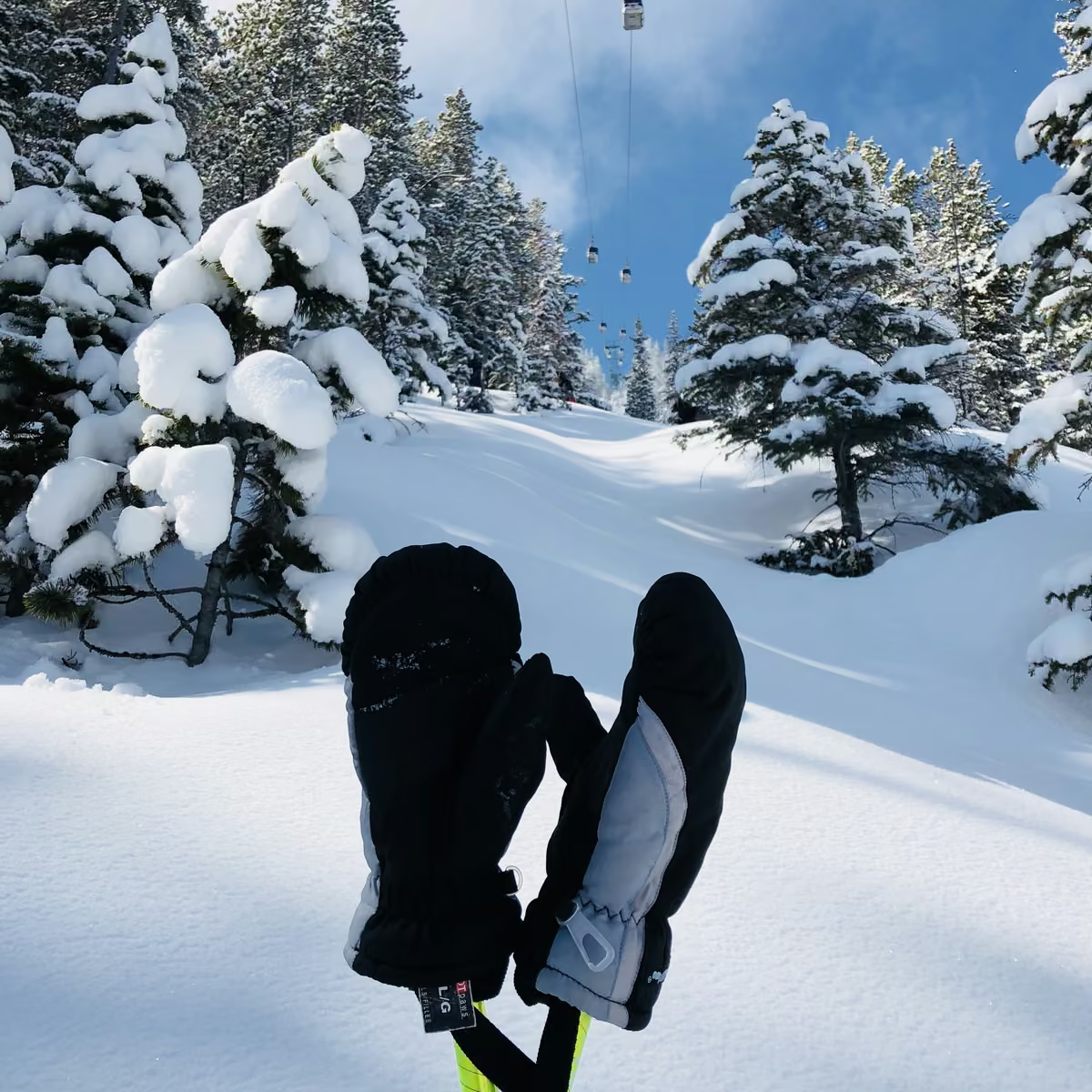

Five Real-World Situations Where Late-Autumn Gloves Are Tested
1. The Initial Climb: Take Gloves Off Before Sweat Soaks Them
Even on a frosty morning, steep uphill walking warms your core within 15–20 minutes. If you leave warm gloves on until your palms sweat, that moisture will chill your hands the moment you step onto a windy ridge. Take outer gloves off early and tuck them into a jacket pocket—just as you manage moisture with a quick-dry base layer.
2. Chain and Rock Sections: Never Grip Cold Metal Bare-Handed
In late autumn, iron chains and ladders drop to ambient freezing temperatures, and shaded rock holds moisture. The MSD Manual on Frostbite notes that direct contact with cold metal dramatically accelerates tissue freezing and cold injury. Wear gloves with high-friction synthetic leather or rubber palms on chain sections.


3. Putting On Chain Spikes or Crampons Without Baring Your Hands
Montbell emphasizes practicing gear adjustments—such as fitting crampons or chain spikes—while wearing your gloves at home before your trip, so you never have to fumble with frozen elastomer bands bare-handed on an icy trail.
4. Operating Smartphones and GPS Maps in the Cold
Using touchscreen-compatible liner gloves prevents you from exposing bare skin every time you check your map. Also protect the phone itself: according to Apple Support (If your iPhone or iPad gets too hot or too cold), iPhones are designed to operate in ambient temperatures between 0°C and 35°C (32°F to 95°F); below 0°C, battery life may temporarily shorten or the device may shut down until warmed back up. Keep your phone and power bank in an inside chest pocket close to body heat.
5. Summit Breaks: Put Warm Gloves On the Moment You Stop
Metabolic heat production drops sharply the instant you stop walking. Put on your insulating mid-layer jacket and warm gloves or mittens immediately upon reaching the summit, before your fingers cool down.


Disposable Hand Warmers (Kairo): Avoiding Low-Temperature Burns
Disposable chemical hand warmers (kairo) are helpful during breaks, but improper use causes low-temperature burns (teion yakedo). According to Japan's National Institute of Technology and Evaluation (NITE) Advisory PDF, low-temperature burns can occur in 3 to 4 hours at 44°C, 30 minutes to 1 hour at 46°C, and just 2 to 3 minutes at 50°C. Both NITE and the Japan Body Warmer Industry Association (Nihon Kairo Kogyokai) warn against pressing a warmer directly against bare skin or compressing it tightly against one spot:
- Do not stuff a hand warmer inside a tight glove and grip it continuously: Glove compression restricts local blood flow while trapping heat against your palm. Keep the warmer inside a jacket pocket and warm your hands intermittently.
- Never use foot/shoe warmers (kutsu-senyo kairo) in your hands or pockets: As the Japan Body Warmer Industry Association explains, shoe warmers are formulated to react with minimal oxygen inside closed footwear; exposing them to open air in a pocket or glove can cause them to overheat dangerously.
- Never sleep with hand or foot warmers attached in a mountain hut, tent, or car.
Recognizing Cold Injuries: Chilblains (Shimoyake) vs. Frostbite (Tosho)
| Condition | Typical Symptoms | Action on the Mountain |
|---|---|---|
| Chilled / Stiff Fingers | Cold fingertips, clumsy fine motor control on zippers/buckles | Step out of the wind, add a dry insulating glove/shell, eat and drink warm fluids |
| Chilblains (Shimoyake / Pernio) | Non-freezing cold injury from repeated exposure to damp cold; redness, swelling, itching, or burning pain after warming | Keep hands dry and warm; consult a physician if symptoms persist |
| Frostbite (Tosho) | Actual freezing of skin and underlying tissue; skin turns numb, hard, cold, and white/waxy, followed by severe pain and blistering upon rewarming | Never rub or massage frostbitten skin (causes tissue damage). Protect from refreezing, retreat to shelter, and seek prompt medical care |
Sources: MSD Manual Consumer Version — Nonfreezing Tissue Injuries, MSD Manual Consumer Version — Frostbite, Japan Society for Surgical Wound Care — Frostbite
Reference Links
- Nagano Prefecture — Autumn Mountain Safety Book (PDF)
- Japan Meteorological Agency — Temperature & Humidity Terminology
- Heus R, Daanen HAM, Havenith G. — Physiological criteria for functioning of hands in the cold: A review (Applied Ergonomics, 1995)
- Montbell — How to Choose Winter Mountaineering Gloves
- Finetrack — Glove Layering System
- Apple Support — If your iPhone or iPad gets too hot or too cold
- National Institute of Technology and Evaluation (NITE) — Low-Temperature Burn Advisory (PDF)
- Japan Body Warmer Industry Association — Preventing Low-Temperature Burns
- Japan Body Warmer Industry Association — Rules for Shoe-Specific Warmers
- MSD Manual Consumer Version — Frostbite
- MSD Manual Consumer Version — Nonfreezing Tissue Injuries
- Japan Society for Surgical Wound Care — Frostbite