

Power Banks for Hiking in Japan: Capacity, Cold Weather, and the 2026 Rules for Flights (160 Wh, Two per Person)
Why your phone drains faster on the mountain, how to pick a power bank for day hikes and hut trips, how to keep it warm, and Japan's in-flight rules since April 24, 2026: no more than two power banks of 160 Wh or less, no charging on board, never in checked bags.
If you use your phone for maps, GPS tracks or location sharing on the trail, a power bank is close to essential. Phones drain faster in the mountains than in town, and a flat phone means no map and no easy way to call for help.
Why phones drain faster in the mountains
- GPS runs for hours at a time.
- The phone keeps searching for a signal as you move in and out of coverage.
- You take many more photos and videos.
- Cold lowers battery performance.
- Hiking apps and location sharing keep running in the background.
In cold weather the power bank itself can also perform worse. Check the operating temperature range for your product.
How much capacity?
There is no official figure for how many phone charges a given capacity gives you: it depends on your phone's battery and on conversion losses. As a rule of thumb:
- Day hikes: a light power bank around 5,000 mAh is a reasonable starting point. Step up to around 10,000 mAh if you take many photos, share your location for long periods or hike in the cold.
- Hut or tent trips, long days: 10,000–20,000 mAh, especially if you also charge a headlamp, watch or earphones.
Bigger means heavier, so match the capacity to the trip rather than always carrying the largest.
What to look for
Ports and cables
USB-C in and out keeps things simple. Check that the bank charges over USB-C, that it can charge your phone over USB-C, and whether you need more than one port. On the trail, needing fewer cables matters more than charging speed.
- Built-in cable: one less thing to carry.
- MagSafe or other wireless charging: convenient for quick top-ups, but wireless charging loses more energy and gets warmer than a cable. Use a cable when efficiency matters.
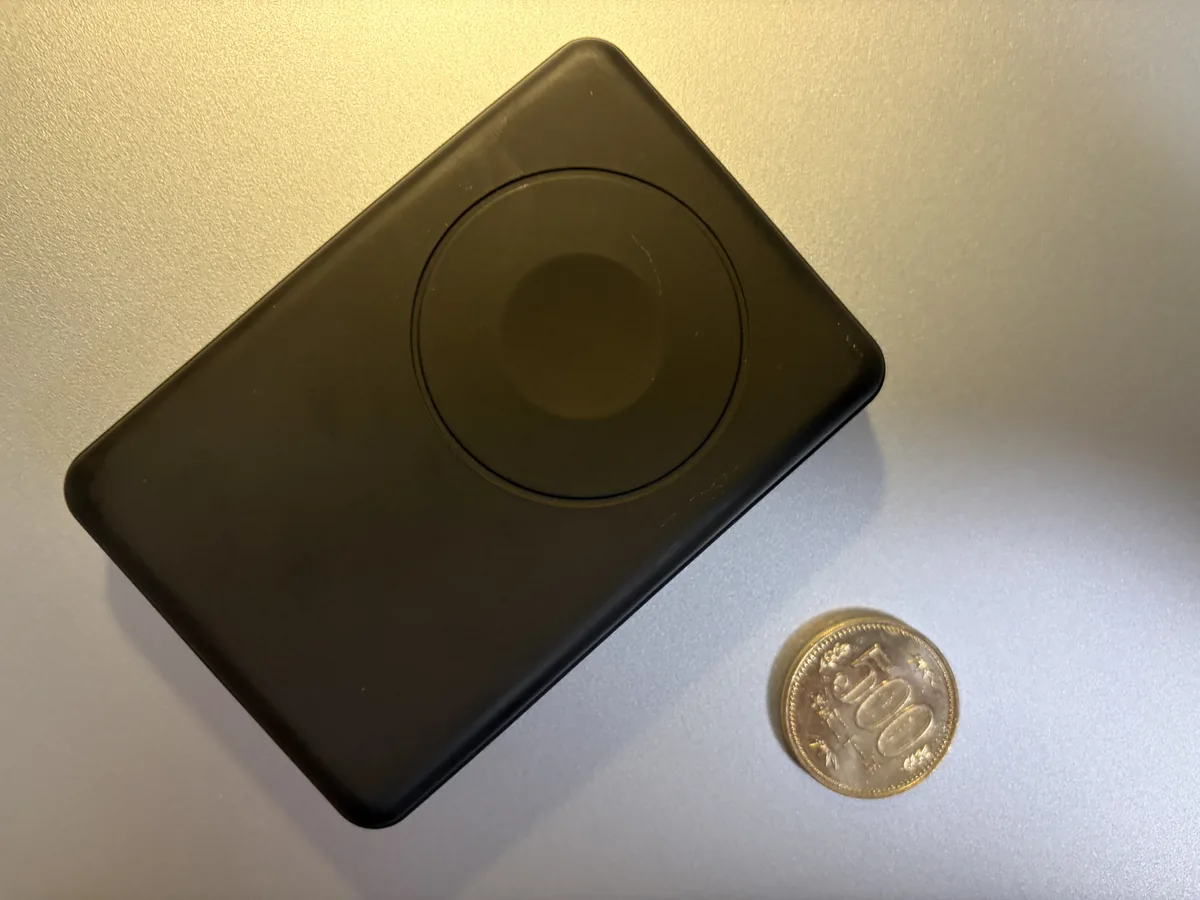
- Apple Watch charging: some models have a built-in watch charger, useful if you rely on the watch for GPS or heart rate. Check the specifications before buying.
Keep it warm
Power banks do not like the cold, even ones sold as cold-resistant.
- Carry it inside your pack, not in an outer pocket.
- Do not leave it on cold ground during breaks.
- Keep it close to your body or clothes when not in use.
Build and handling
Choose rounded edges, a non-slip surface, a button you can press and a battery indicator you can read, ideally while wearing gloves.
On the trail
- Charge the phone and the power bank fully the night before.
- Use a short, sturdy cable.
- Save power: close unused apps, lower the screen brightness, use low-power mode, and switch to airplane mode when you do not need a signal.
- Charge during breaks rather than while walking, when the cable can snag and strain the port.
Taking a power bank on a plane in Japan (from April 24, 2026)
Following an emergency revision of the ICAO international standard, Japan's Ministry of Land, Infrastructure, Transport and Tourism (MLIT) added these rules from April 24, 2026:
- You may carry no more than two power banks, each 160 Wh or less, in the cabin.
- Do not charge the power bank on board.
- Do not charge other devices from the power bank on board. This is a request, not a legal ban.
- As before, power banks are banned from checked baggage; keep them in your carry-on.
Watt-hours = rated capacity (mAh) × rated voltage (V) ÷ 1,000. For example, 10,000 mAh at 3.7 V is 37 Wh.
JAL notes that, because of an IATA rule change, the limit may become 100 Wh from January 2027. Check your airline's own rules as well.
Sources: MLIT press release (PDF, Japanese), MLIT Civil Aviation Bureau notice, April 23, 2026 (PDF, Japanese), JAL (Japanese)
Buses
Bus companies set their own rules; some ask you to keep power banks with you rather than in the luggage hold. Check before boarding.
Buying in Japan: look for the PSE mark
According to the Ministry of Economy, Trade and Industry (METI), power banks without the round PSE mark may not be sold in Japan since February 1, 2019. Check for the mark and the name of the registered manufacturer or importer printed near it. Follow the manual's temperature range, and stop using a power bank that gets hot, smells, swells or has been damaged.
Source: METI power bank FAQ (Japanese)
Summary
- If your phone is your map, carry a power bank.
- Start around 5,000–10,000 mAh for day hikes; go larger for multi-day trips.
- Keep it warm inside your pack.
- On flights in Japan: two at most, 160 Wh or less each, no charging on board, never in checked bags.