
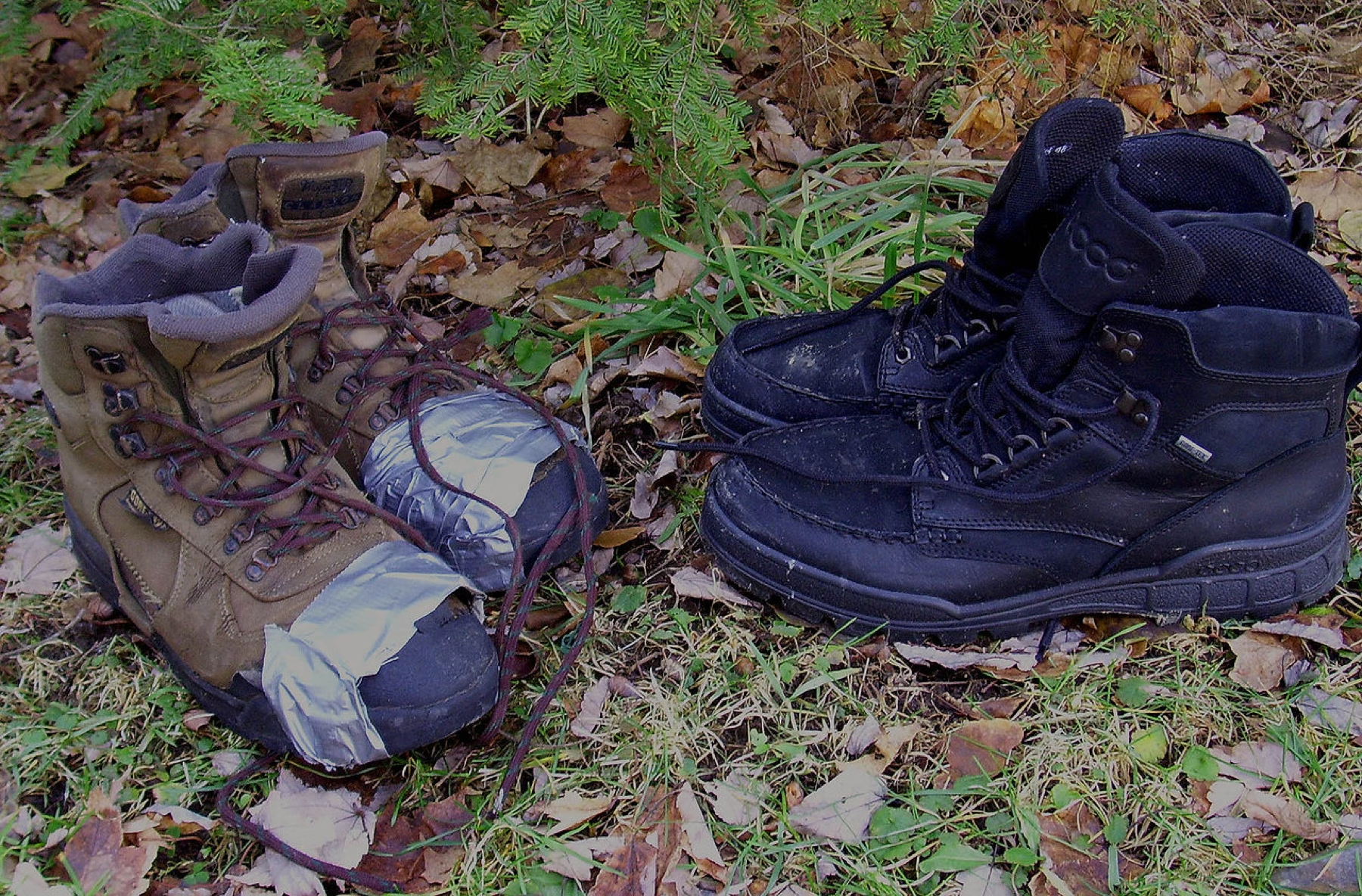
Photo: Daniel Case, Wikimedia Commons (CC BY-SA 3.0)

How to Choose Hiking Boots: Low, Mid and High Cut, Sizing, Waterproofing and Breaking Them In
Low cut, mid cut or high cut? How to match hiking boots to the trips you plan, how much toe room to leave, when waterproof-breathable boots make sense, and how to break in a new pair, based on Montbell's official buying guides.
This guide is based on Montbell's official guides to choosing footwear, boot sizing and hiking socks (in Japanese), checked October 24, 2026. Prices and specifications change, so check the product page before you buy.
"Do I really need hiking boots? Can't I just wear sneakers?" Almost everyone starting out asks this.
The short answer: hiking boots are one of the most important pieces of gear for staying safe and comfortable on the trail. Ankle support, a sole that grips, and waterproofing in the rain are hard to get from ordinary sneakers, and on mountain paths the risk of falling or twisting an ankle goes up.
This guide sorts out the types of hiking boots and how to choose them, in a way that makes sense for beginners.
Three types of hiking boots, by cut
Hiking boots fall into three broad types by cut, meaning how high they come up around the ankle.
Low cut: light and agile
Montbell describes low-cut shoes as giving the ankle plenty of freedom, with a soft sole that makes for light, quick walking. It recommends them for light trekking and for trail running with a light load.
- Pros: your ankle moves freely and walking feels light
- Cons: less ankle support, which can feel unstable on rock or steep slopes
- Good for: day hikes on well-maintained trails on low hills, with a light pack
Mid cut: the balanced standard
Montbell describes mid-cut boots as sitting between high-cut and low-cut boots in performance, with moderate ankle protection and a slightly stiff sole, suited to day hikes and hut trips with a relatively light load.
- Pros: ankle protection and sole stiffness are in the middle, so they cover day hikes through hut stays
- Cons: not as protective as high-cut boots
- Good for: day hikes, hut trips with a light pack
High cut: support and durability
Montbell describes high-cut boots as holding the ankle to reduce the risk of sprains, with a rigid sole that protects the bottom of the foot from uneven rock. It recommends them for traverses above the tree line and for camping trips with a heavy pack.
- Pros: firm ankle protection; good on rock and with heavy loads
- Cons: the stiff sole can feel awkward until you get used to it
- Good for: traverses, camping trips, rocky terrain. For snowy mountains you need separate boots that work with crampons
Why the sole matters
The sole is directly tied to safety. Montbell matches sole stiffness to the cut like this:
| Sole stiffness | Cut (Montbell) | Use |
|---|---|---|
| Soft | Low cut | Light trekking, short day hikes |
| Slightly stiff | Mid cut | Day hikes to hut trips |
| Stiff | High cut | Traverses, camping trips |
A stiffer sole protects the bottom of your foot better on rock, but flexes less as you walk.
Five points for choosing hiking boots
1. Decide what kind of hiking you will do
Start with the kind of mountains you want to walk.
- Low hills and regular hiking trails: low cut to mid cut
- High mountains such as the Japan Alps: mid cut to high cut
- Multi-day traverses with a tent, or rocky ridges: high cut
- Snowy mountains in midwinter: stiff boots that take crampons
2. Get sized for hiking boots specifically
Montbell says the right size for hiking boots is one with about 1 cm of space in front of your toes while wearing hiking socks. When you try them on, use a test trail (a sloped walking area found in many stores) and check that your toes do not hit the front and your foot does not slide.
The thickness of your socks changes the fit, and Montbell's sock guide notes that the right thickness depends on the activity and the footwear. Try boots on with the socks you will actually hike in.
Fitting checklist
- With hiking socks on, lace up and check for any spots that press or rub
- On the test trail, check that your toes do not hit the front on the way down
- On a step or slope, check that your heel does not lift and your ankle does not wobble
3. Waterproof or not (Gore-Tex)
Many hiking boots come in versions with a built-in waterproof-breathable membrane such as Gore-Tex.
Montbell explains that wet feet are not just uncomfortable but can cause blisters, and in winter there is a risk of frostbite, so keeping the inside of the boot dry matters. Feet get wet from water coming in and from your own sweat, so a boot needs both waterproofing and breathability. For that reason Montbell recommends boots with waterproof-breathable materials such as Gore-Tex, while noting that breathable non-waterproof shoes are also an option for day hikes in good weather.
- Waterproof (GTX): better for rain, morning dew, stream crossings and lingering snow
- Non-waterproof: more breathable, but at a disadvantage once wet
Japan's mountains get a lot of rain, so if you are unsure, a waterproof-breathable model is the easier choice.
4. Weight
You lift your boots with every step. When comparing boots for the same use, look at the weight per boot too. We could not find any official definition of what counts as "lightweight," so we do not give a number here.
5. Break them in
It is safer not to wear brand-new boots straight onto a real hike; walk in them first.
- Start with walks around your neighborhood and check for pressure points or heel slip
- Then try slopes or stairs, checking for heel lift going up and toe contact going down
- If anything hurts, consider different boots or insoles
We could not find any official guideline for how many kilometers you should walk to break boots in.
FAQ
Can I hike a low mountain in sneakers?
On a well-maintained hiking path, sneakers will get you there, but the risk of slipping in sudden rain, mud or on the way down is much higher. For safety, we recommend proper hiking shoes if you can.
Where should I buy hiking boots?
Trying them on at an outdoor specialist is the safest bet. Montbell stores across Japan, for example, offer foot measurement and test fittings. If you buy online, checking your size in a store first reduces mistakes.
How should I care for hiking boots?
Care instructions vary by boot. Check the manual that came with your boots or the maker's official site. Worn or peeling soles are a safety issue, so inspect them before each trip.
Summary
- Choose low, mid or high cut based on the terrain you will walk and the weight you will carry
- Even as a beginner, try boots on first, checking for toe room and a good fit around the ankle
- With Japan's rainy mountains, a waterproof-breathable model is the easier choice when in doubt
- If unsure, start with mid cut, which covers day hikes through hut stays
- For traverses and rocky terrain, the stability and protection of high-cut boots is a big reassurance
Hiking boots are an investment in your safety. Boots that do not suit your hiking or do not fit properly increase the risk of injury and accidents. Try on several pairs at a specialist store and find the pair that fits your feet and the way you hike.
References
- Montbell: how to choose footwear (Japanese)
- Montbell: how to choose hiking boots for women, including sizing (Japanese)
- Montbell: how to choose hiking socks (Japanese)