
Do You Need a Bear Bell for Hiking in Japan? Role, Limitations, and How to Choose One
Why hikers in Japan carry bear bells, what Japan's Ministry of the Environment recommends for avoiding surprise bear encounters, where bells fall short, and what features (silencer mechanism, shape, attachment) to look for.
Information checked October 24, 2026. Bear safety guidance in this article is based on official publications from Japan's Ministry of the Environment ("What You Need to Know About Bears Before Visiting National Parks" and "Information and Initiatives on Bears").
1. Do You Need a Bear Bell When Hiking in Japan?
Whenever you hike in regions of Japan inhabited by bears—Asiatic black bears (tsukinowaguma) in Honshu and Shikoku, or brown bears (higuma) in Hokkaido—carrying a bear bell is a practical, worthwhile precaution.
The core principle of bear safety is avoiding an encounter in the first place, rather than trying to drive a bear away after getting close. Japan's Ministry of the Environment lists "letting bears know that humans are present (for example, making noise with a bell, a radio, clapping your hands, or talking)" as a primary measure to avoid encounters, alongside avoiding solo travel where possible, exercising extra caution in poor-visibility areas, along streams, and in strong wind or rain, and keeping up precautions all the way until you finish descending.
A bear bell is especially useful in the following situations:
- Long stretches of forested trail
- Trails with poor visibility along streams or dense bamboo grass (sasa)
- Early morning and late afternoon hours when bears are more active
- Solo hikes
- Quieter trails with few other hikers

At some sightseeing spots and nature trail entrances in Japan, bear bells are lent out free of charge. Photo: Wikimedia Commons "Bear Bell クマ鈴 熊鈴 Free Rent 2019.jpg" by Wiki Taro (CC0 / Public Domain)

2. When and Where Should You Use a Bear Bell?
According to the Ministry of the Environment, bear activity periods vary by region and climate, but bears are generally active from roughly March through November and hibernate from roughly December through February (though warm winters or regional conditions can shift those dates).
The Ministry of the Environment highlights the following conditions as requiring particular caution:
- Areas with poor visibility (sharp bends, dense brush, ridge crests)
- Along mountain streams (where the sound of rushing water masks footsteps and bells)
- During strong wind or rain (when sound does not carry well)
- Solo travel (which the Ministry advises avoiding where possible)
In places where wind or stream noise drowns out a bell, combine your bear bell with talking aloud or clapping your hands.
3. What a Bear Bell Does—and Its Limitations
A bear bell is a tool to alert bears to your presence in advance so you do not startle them at close range.
As the Ministry of the Environment notes, bears normally avoid humans when they notice people approaching from a distance. By giving early warning as you walk, a bear bell reduces the risk of a sudden, close-range encounter. Its role is preventing surprise encounters, not repelling a bear that is already nearby.
However, wearing a bear bell alone does not guarantee safety. Keep these additional rules in mind:
- Check recent bear sighting reports before your hike on prefectural websites or at local visitor centers (Ministry of the Environment).
- Avoid hiking alone whenever possible (Ministry of the Environment).
- Supplement the bell with your voice or hand claps in blind corners, along loud streams, or in strong wind.
- Never leave food, packs, or garbage unattended at rest stops or campsites.
- Avoid wearing earphones that block out ambient forest sounds.

Always check bear warning signs and recent sighting notices at trailheads in addition to carrying a bell. Photo: Wikimedia Commons "Bear warning sign at Tokai Nature Trail in Seto City.jpg" by KKPCW (CC BY-SA 4.0)

What to Do If You Spot a Bear
According to the Ministry of the Environment:
- Never approach the bear.
- Keep facing the bear and back away slowly and calmly.
- Do not shout, do not turn your back and run, and do not throw packs or stones (which can provoke the bear).
- If a bear charges or attacks: Lie face down on the ground and clasp both hands behind your neck to protect your neck, face, and abdomen. If you carry bear deterrent spray, use it when the bear comes within range.
For a fuller overview of bear safety in Japan, see our Bear Safety Guide for Hiking in Japan.
4. How to Choose a Bear Bell
Bear bells differ noticeably in everyday usability. Focusing on the points below makes it easier to choose one that fits your hiking style.
1. Silencer Mechanism (Mute Function)
This is the single biggest practical difference between models. While you want a clear ring on forested mountain trails, a constantly ringing bell is disruptive on trains, buses, residential streets near the station, and crowded trail sections.
- With a silencer (magnetic strap, sliding cover, or retractable clapper): Lets you silence the bell with one hand during transit and switch it on at the trailhead.
- Without a silencer: Simple construction with fewer moving parts, but rings continuously unless packed away inside your bag.
2. Bell Shape
Bear bells generally fall into three shapes:
- Bell (dome) type: Open-bottom bell that projects a clear ring as it swings.
- Cowbell type: Angular housing, often paired with a strap or magnet for muting.
- Round jingle (suzu) type: Enclosed spherical bell with a metal pellet inside; compact and less likely to snag, though typically quieter than an open dome bell.
(Note: While tone and material—such as brass versus aluminum—are often discussed among hikers, there is no official public dataset comparing bear response by bell material or shape. Test the sound and volume in store if possible.)
3. Size, Weight, and Attachment
- Carabiner attachment: Makes it easy to move the bell between your backpack's shoulder harness, hip-belt loop, or side pocket.
- Swing and clearance: A bell that hangs too low can swing against rocks on steep scrambles or chain sections. Choose a compact model that stays secure while walking.
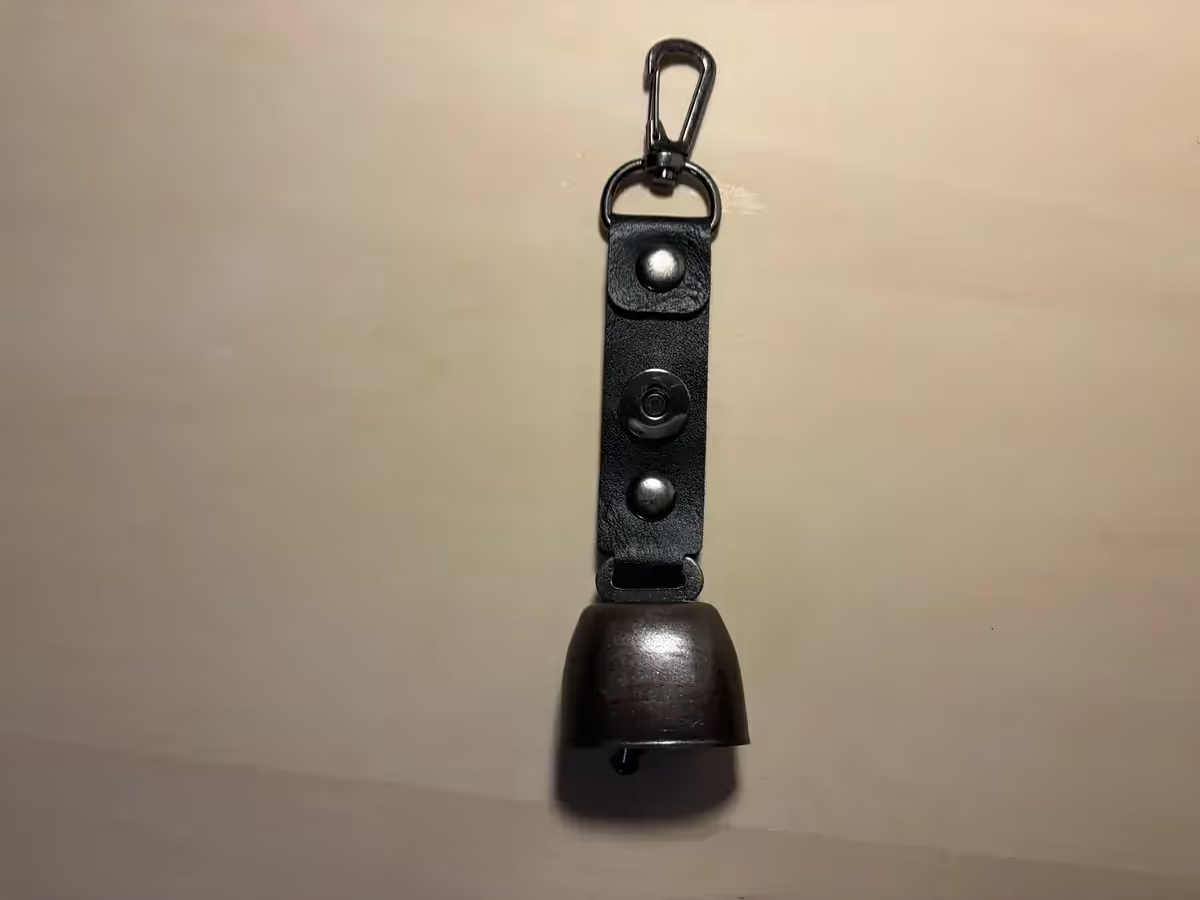
5. Real-World Example: Sliding-Cover Silencer Bell
To illustrate how a silenced bear bell works in practice, the photos below show a compact sliding-cover model with a carabiner and leather strap:
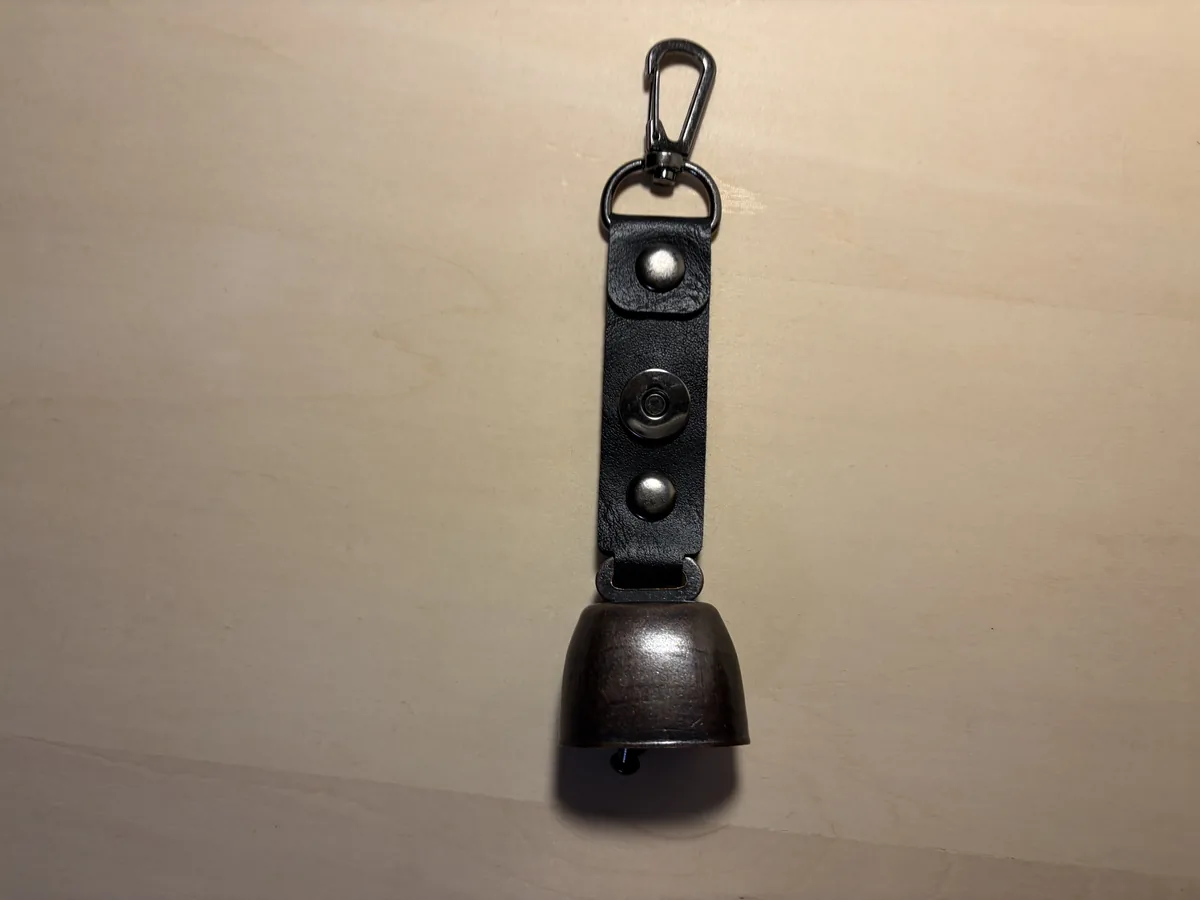
Its compact profile clips neatly onto a backpack shoulder strap or belt loop without looking out of place on buses or trains to the trailhead.
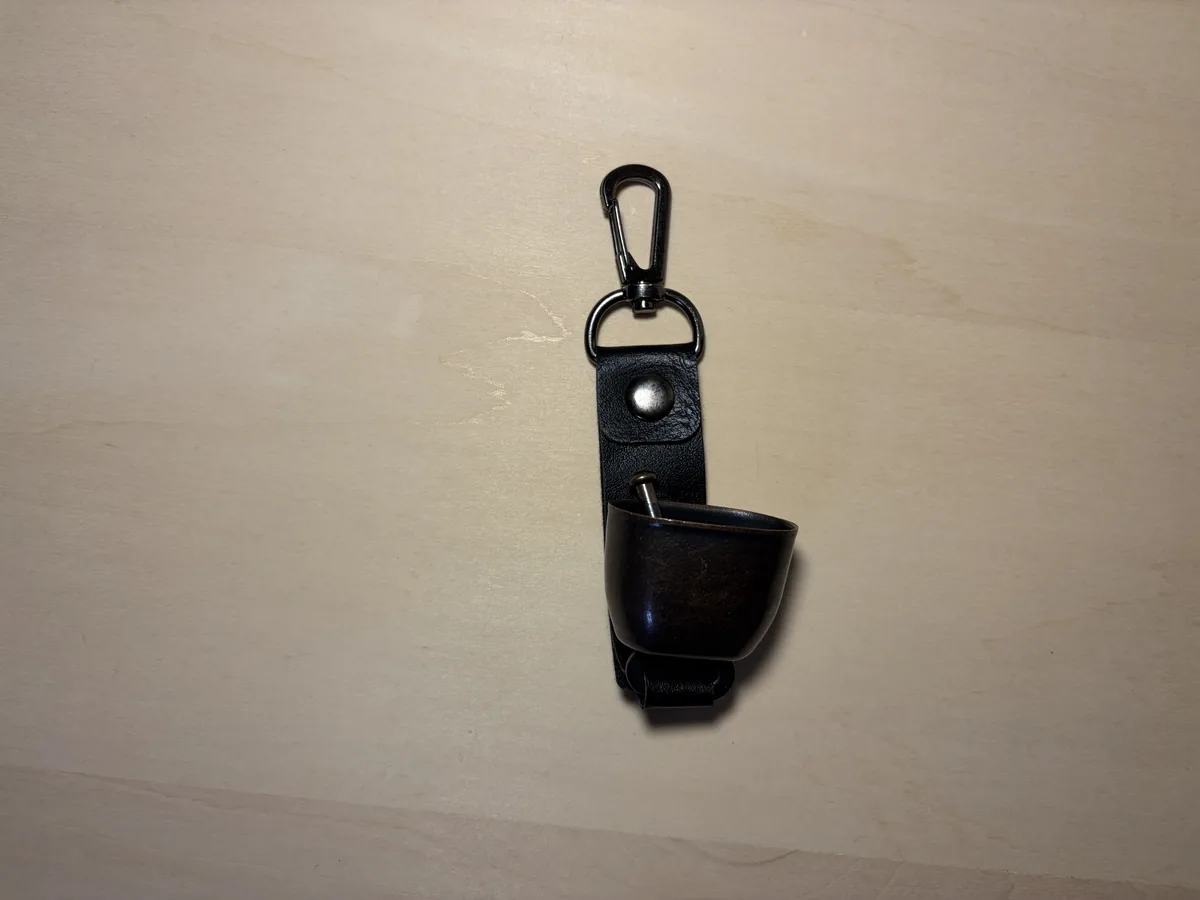
Sliding the outer cover open releases the clapper so the bell rings naturally with your stride; sliding the cover shut dampens the clapper when you board a train or walk through town after descending.
6. Summary
- Purpose: A bear bell alerts bears to your presence in advance to prevent surprise close-range encounters.
- When to use it: Keep it ringing on forested trails, early in the morning or late in the afternoon, and when hiking in small groups or solo.
- Know its limits: Wind and stream noise easily mask a bell—combine it with clapping or talking in blind spots, and check official bear sighting notices before departure.
- How to choose: Look for a one-touch silencer mechanism, a secure carabiner, and a size that does not get in the way on steep terrain.