

Photo by Daniel Case via Wikimedia Commons (CC BY-SA 3.0)
Leather Hiking Boots Pros & Cons: How Full-Grain, Nubuck & Suede Compare with Synthetic Boots
A practical guide to leather hiking boots: the three types of boot leather (full-grain, nubuck, and suede), their advantages and drawbacks compared with synthetic mesh boots, essential break-in and care steps, and how to choose the right upper for your hiking style.
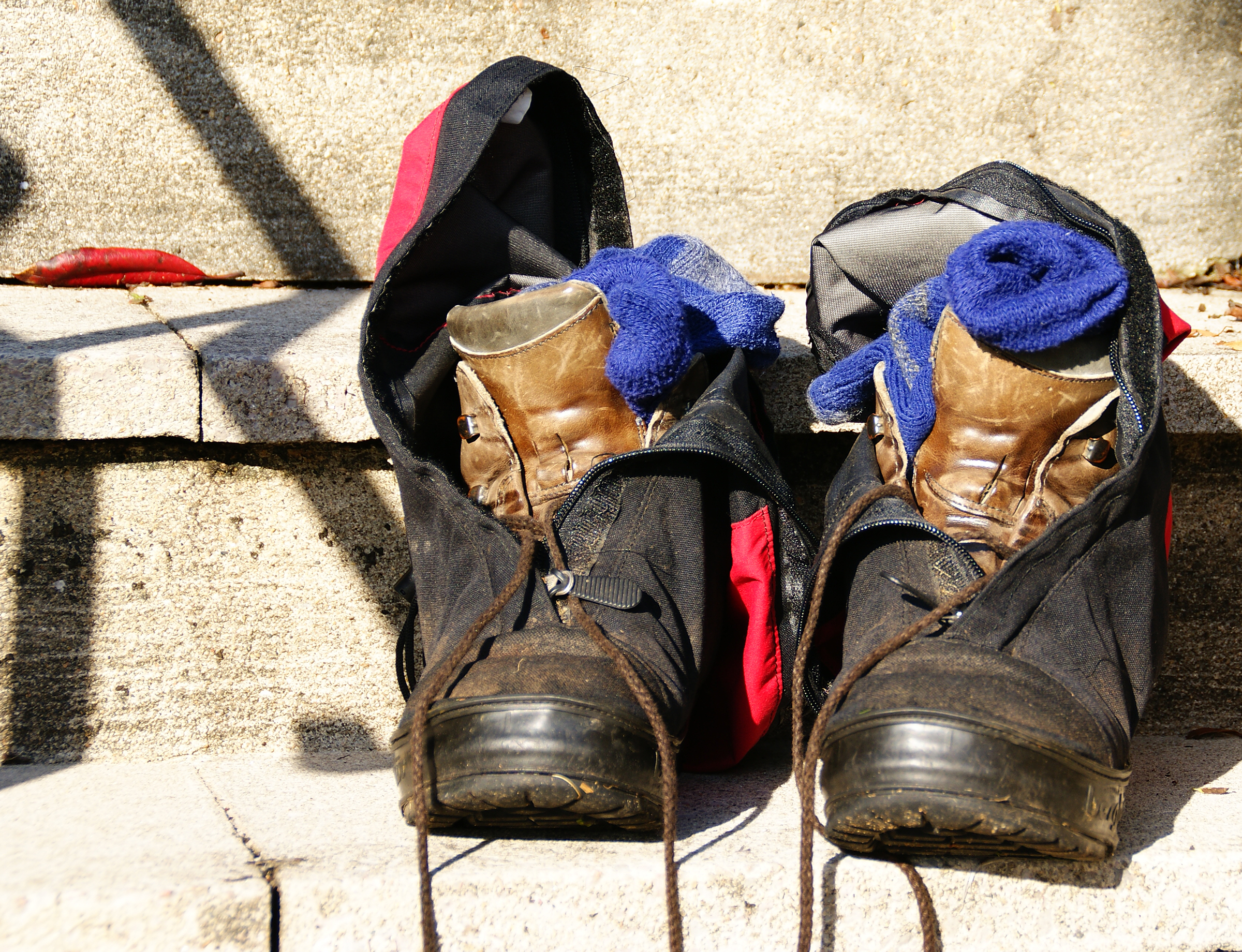
Walk into any mountain gear shop and you will see two broad families of hiking footwear on the wall: lightweight, colorful synthetic (nylon/polyester mesh) boots, and classic, substantial natural leather boots.
Many hikers find themselves asking:
- "Leather boots look durable and timeless, but aren't they too heavy and stiff for a beginner?"
- "How much maintenance do leather uppers actually need?"
- "Should I pick leather or synthetic for Japanese mountain trails?"
This guide explains the three main types of leather used in hiking boots, breaks down the real-world pros and cons of leather versus synthetic uppers, and shows you how to choose and care for the right pair.
The 3 Types of Leather Used in Hiking Boots
Not all "leather hiking boots" use the same cut or finish of hide. Understanding the three primary leather types will help you read product specs accurately.
1. Smooth Full-Grain Leather (Single-Piece / Waxed Leather)
Cut from the outer surface of the hide with its natural grain left intact, full-grain leather is the toughest, thickest, and most water-resistant material used in mountaineering footwear.
- Construction: Often crafted from a single piece of hide with minimal stitching to eliminate seam failure points.
- Best for: Multi-day alpine traverses with heavy packs (such as the Northern and Southern Japanese Alps), rocky scree slopes, and 3-season to shoulder-season mountaineering.
- Feel: Stiff out of the box and requires a dedicated break-in period, but molds closely to the contours of your foot over years of use.
2. Nubuck Leather
Nubuck is top-grain cattle hide whose outer surface has been lightly buffed with fine abrasive to create a velvety, matte nap.
- Construction: Retains nearly the same fiber strength and durability as smooth full-grain leather while offering slightly greater initial suppleness and breathability.
- Best for: All-around trekking boots—from rugged day hikes to multi-day hut-to-hut routes.
- Note on appearance: Applying conditioning wax or waterproofing cream darkens nubuck and smooths down its fuzzy nap into a glossy, waxed finish. While the factory matte texture changes, water repellency and resistance to dirt actually improve.
3. Suede / Split Leather (Often Combined with Synthetic Panels)
Suede (or split leather) is made by buffing the inner layer of a split hide. Because its fibers are looser and more flexible than full-grain or nubuck leather, manufacturers frequently pair suede overlays with high-tenacity nylon or polyester mesh panels.
- Construction: Places suede across high-wear zones (toe box, heel counter, and lacing eyelets) while using breathable synthetic fabric across flex points.
- Best for: Entry-level trekking boots, 1,000–2,000 m mountain day hikes, and overnight hut stays.
- Feel: Much lighter and softer right out of the box, blending the abrasion protection of leather with the step-in comfort of synthetic footwear.
4 Key Advantages of Leather Hiking Boots
1. Exceptional Abrasion Resistance and Multi-Year Longevity
Japanese alpine routes—especially granite ridges, volcanic scree, timber steps, and root-laced forest trails—subject boot uppers to constant scraping. Thick leather shrugs off rock abrasion that can fray synthetic mesh panels over time, and fewer exterior seams mean fewer threads exposed to wear.
When properly cleaned and conditioned, a quality leather upper easily outlasts two or three pairs of outsole rubber. As long as the leather upper remains healthy, you can have the worn Vibram outsole resoled time after oil-change-like maintenance—allowing a single pair of boots to serve you for 5 to 10 years or more.
(Note: Most hiking boots use a polyurethane [PU] midsole shock-absorbing layer that gradually degrades via hydrolysis after roughly 4 to 6 years regardless of upper material; replacing the midsole + outsole during a factory resole restores the boot to like-new performance.)
2. A Custom Fit That Molds to Your Foot Over Time
Natural collagen fibers in leather gradually relax and conform to the exact shape of your instep, ankle bones, and forefoot as you hike. After several break-in hikes, a leather boot develops a supportive, glove-like fit that holds your heel securely on steep descents without harsh pressure points.
3. Superior Ankle Stability and Cold-Wind Protection
Thick leather uppers provide natural structural support around the ankle and midfoot. When descending long rocky trails with a 12–18 kg overnight pack, that lateral stiffness reduces ankle roll and foot fatigue. In addition, dense leather blocks biting ridge winds and retains warmth far better than thin mesh during chilly spring, autumn, and high-elevation summer mornings.
4. Natural Water Repellency Backed by GORE-TEX Liners
Most modern leather trekking boots combine a water-repellent leather exterior with an internal GORE-TEX waterproof-breathable membrane. When the outer leather is kept nourished with wax or waterproofing spray, water beads off the surface before it can soak the upper—preventing the cold "wet-out" feeling that happens when a synthetic mesh outer fabric becomes saturated in heavy rain.
4 Drawbacks of Leather Hiking Boots (and How to Manage Them)
1. Heavier Weight per Step
A classic single-piece full-grain or heavy nubuck boot typically weighs 650 g to 900 g+ per boot (1.3–1.8 kg per pair), compared with 400 g to 550 g per boot for lightweight synthetic mid-cuts. If your leg muscles are not yet conditioned for mountain walking, extra weight on your feet can increase fatigue on long approaches.
2. Stiffer Initial Feel and Required Break-In Period
Brand-new full-grain leather boots rarely feel plush on day one. Taking a stiff pair straight onto a 10-hour alpine traverse is a common recipe for heel blisters.
How to break them in safely:
- Wear them on short neighborhood walks first, then take 2 to 3 half-day hikes on low local mountains (satoyama) to let the flex points soften before tackling a major trip.
3. Slower Drying and Lower Breathability in Hot, Humid Summers
Compared with open synthetic mesh, thick leather vents heat and moisture more slowly. On humid mid-summer climbs in low-elevation Japanese forests, your feet will run warmer—making medium- to heavy-cushion merino wool socks essential for wicking sweat away from your skin. And if water ever pours over the ankle collar in a downpour, leather takes longer to dry inside a mountain hut than synthetic fabric.
4. Mandatory Post-Hike Cleaning and Conditioning
If you leave mud crusted on leather boots in a closet, the mud draws natural oils out of the hide, causing the leather to dry out, stiffen, and eventually crack—while encouraging mold growth in humid Japanese summers.
Fortunately, basic leather boot care after a hike takes only a few minutes:
- Remove the insoles and laces, and brush off dust and dried mud with a horsehair or nylon brush (rinse heavy mud with water and a damp sponge).
- Let the boots dry in a shaded, well-ventilated indoor spot away from direct sunlight, campfires, or hair dryers (high heat shrinks and cracks leather).
- While the leather is clean (or slightly damp for water-based treatments), apply a thin coat of boot wax, conditioning cream, or leather-compatible waterproofing spray according to the leather type.
Leather vs. Synthetic Hiking Boots: Quick Comparison
| Feature | All-Leather (Full-Grain / Nubuck) | Leather + Synthetic Hybrid (Suede + Mesh) | All-Synthetic (Mesh / Nylon / TPU) |
|---|---|---|---|
| Weight (per boot) | Heavy (~650–900 g) | Medium (~500–650 g) | Light (~380–550 g) |
| Out-of-Box Comfort | Firm; needs break-in hikes | Comfortable after 1–2 short hikes | Soft and flexible from day one |
| Durability & Rock Protection | Excellent (5–10+ years with resoles) | Good (3–6+ years) | Moderate (mesh wears faster on rock) |
| Ankle & Heavy-Pack Support | High (ideal for 3,000 m peaks & multi-day packs) | Medium-High (versatile for day & hut hikes) | Light-Medium (best for light daypacks) |
| Breathability in Summer | Moderate (warmer in humid valleys) | Balanced | High (cool and fast-drying) |
| Post-Hike Maintenance | Brushing + periodic wax/cream care | Brushing + waterproofing spray/conditioner | Brushing + washing & waterproofing spray |
| Upfront Price | Higher (~35,000–65,000+ yen) | Mid-range (~22,000–38,000 yen) | Accessible (~16,000–30,000 yen) |
Which Should You Choose?
Choose All-Leather (Full-Grain or Nubuck) If:
- You plan to hike rocky alpine ridges (such as the Northern Alps, Yatsugatake, or Hokkaidō peaks) or carry heavier multi-day packs for hut-to-hut and tent traverses.
- You enjoy maintaining your gear, want a boot that molds uniquely to your foot, and prefer resoling a single trusted pair over many years.
Choose a Suede + Synthetic Hybrid Boot If:
- You want your first serious pair of hiking boots for Japanese mountains—covering everything from Mt. Takao and Mt. Tanzawa to Mt. Fuji and summer alpine hut stays—without the weight or stiff break-in of a traditional one-piece leather boot.
Choose an All-Synthetic Boot If:
- You primarily do fast day hikes on well-maintained trails in spring through autumn, prioritize lightweight agility and maximum ventilation in hot weather, and want minimal post-hike upkeep.
For a broader overview of outsole stiffness, cut height (high-, mid-, and low-cut), and specific model comparisons, check out our Hiking Boots Buyer's Guide.