

Preventing 'Sharibate' (Bonking) on the Trail: Hiking Calorie Formula, Best Trail Snacks, and Recovery
What is 'sharibate' (bonking / hitting the wall) in Japanese hiking, and how much food do you actually need? Learn the scientific hiking calorie formula, how to combine fast- and slow-burning trail snacks, and how to recover when your legs give out.
Halfway up a steep climb, your legs suddenly feel like lead, your pace collapses, cold sweat breaks out, and your head grows foggy or irritable. In Japanese mountaineering, this sudden energy crash is called sharibate (シャリバテ)—derived from shari (cooked rice, a mountaineer's staple fuel) and bate (exhaustion)—the exact equivalent of "bonking" or "hitting the wall" in endurance sports.
Far from being a harmless inconvenience, running out of fuel is a leading trigger of mountain accidents. According to the National Police Agency's 2025 Mountain Distress Statistics, out of 3,623 people involved in mountain emergencies across Japan in 2025, 356 victims (9.8%) required rescue primarily due to fatigue—more than double the 170 fatigue cases recorded in 2020—and countless slips, falls, and hypothermia cases begin when a hiker's blood sugar and muscle glycogen run dry.
This guide breaks down the physiology of sharibate, gives you a simple scientific formula to calculate your exact calorie needs for any route, and shows how to choose and time trail snacks (kodosho) so your engine never stalls.
What Happens Inside Your Body During Sharibate?
When you hike, your muscles burn a mix of carbohydrates (blood glucose and glycogen stored in the muscles and liver) and body fat. While your body carries tens of thousands of kilocalories of fat, its carbohydrate tank (glycogen) holds only about 1,500 to 2,000 kcal—and importantly, even burning fat requires a continuous spark of carbohydrate ("fats burn in the flame of carbohydrates").
Furthermore, the brain and central nervous system rely almost exclusively on blood glucose for fuel. When prolonged climbing drains liver and muscle glycogen faster than you replenish it:
- Muscles lose power: Your legs feel heavy, coordination drops, and you begin catching your toes on tree roots and rocks.
- The brain starves (hypoglycemia): Concentration, balance, and judgment deteriorate; hikers become quiet, irritable, dizzy, or shaky, with trembling hands and cold sweat.
- Thermoregulation falters: Without glucose to fuel metabolism, your core temperature drops rapidly in wind or rain, paving the way for hypothermia.
Distinguishing Sharibate from Other Mountain Illnesses
| Condition | Primary Cause | Key Distinguishing Signs | Immediate Field Fix |
|---|---|---|---|
| Sharibate (Bonking / Hypoglycemia) | Depletion of glycogen & blood glucose from insufficient food intake | Intense hunger (or sudden nausea), heavy legs, hand tremors, cold sweat, irritability; improves within 15–30 min after eating fast sugar | Rest, take fast-acting sugar (energy gel, yokan, sweet drink) followed by complex carbs |
| Dehydration / Heat Exhaustion | Loss of water and electrolytes (sodium) through sweat | Dry mouth, dark/scanty urine, muscle cramps, rapid pulse, dizziness when standing | Move to shade, drink oral rehydration solution (OS-1) or sports drink + salt |
| Hypothermia | Heat loss exceeding heat production (wind, rain, wet clothes) | Persistent shivering, numb fingers, pale skin, slurred speech or apathy | Shelter from wind, add dry layers/rain gear, warm the torso, and feed warm sweet fluids |
| Acute Mountain Sickness (AMS) | Rapid ascent above ~2,500 m (low oxygen pressure) | Throbbing headache, nausea, loss of appetite, dizziness; does not resolve simply by eating sugar | Stop ascending, breathe deeply, hydrate, and descend if symptoms worsen |
How Many Calories Does a Hike Burn? The Scientific Formula
How much food should you actually pack? Exercise physiologist Prof. Masayoshi Yamamoto (Kanoya National Institute of Fitness and Sports) developed a widely used equation for estimating total energy expenditure on Japanese mountain trails based on walking time, distance, cumulative ascent/descent, body weight, and pack weight:
$$\text{Energy Expenditure (kcal)} = \text{Course Constant} \times (\text{Body Weight [kg]} + \text{Pack Weight [kg]})$$
Where the Course Constant is calculated as:
$$\text{Course Constant} = (1.8 \times \text{Walking Hours}) + (0.3 \times \text{Distance [km]}) + (10.0 \times \text{Cumulative Ascent [km]}) + (0.6 \times \text{Cumulative Descent [km]})$$
(Apps such as YAMAP and Yamareco use this exact formula under the hood to display the "Course Constant" on their route maps.)
Worked Example: A Typical 6-Hour Day Hike
Suppose a hiker weighing 60 kg carries a 5 kg backpack (total weight = 65 kg) on a day hike with:
- Walking time: 6 hours
- Distance: 10 km
- Cumulative elevation gain: 1,000 m (1.0 km)
- Cumulative elevation loss: 1,000 m (1.0 km)
- Course Constant: $$(1.8 \times 6) + (0.3 \times 10) + (10.0 \times 1.0) + (0.6 \times 1.0) = 10.8 + 3.0 + 10.0 + 0.6 = \mathbf{24.4}$$
- Total Energy Burned: $$24.4 \times (60 + 5) = \mathbf{1,586\text{ kcal}} \text{ (approx. 1,590 kcal)}$$
To put 1,590 kcal in perspective using classic Japanese trail foods:
- CalorieMate Block (100 kcal per 20 g bar): ~16 bars (4 full 4-bar boxes)
- Imuraya Sports Yokan Azuki (116 kcal per 40 g bar): ~14 bars
- Morinaga in-Jelly Energy (180 kcal per 180 g pouch): ~9 pouches
The "70–80% Replenishment Rule"
You do not need to eat all 1,590 kcal while walking, because body fat supplies part of the energy and you will eat a full meal after descending. However, sports nutrition guidelines for mountaineering recommend replenishing 70% to 80% of your burned calories across breakfast, trail snacks, and lunch—and aiming to take in roughly 100 to 200 kcal every hour on the move before you ever feel hungry.
The 3-Phase Eating Strategy: Before, During, and After the Climb
1. Before the Trailhead (Night Before & Morning Of)
- Eat a carbohydrate-rich dinner and breakfast: Rice, udon, pasta, bread, or bananas load your liver and muscle glycogen tanks before you take your first step.
- Never start a steep climb on an empty stomach: Starting fasted after an early-morning drive is the #1 cause of bonking in the first two hours. Even if you have low appetite at 05:00 AM, eat an onigiri (rice ball), banana, or energy jelly 30–60 minutes before setting out.
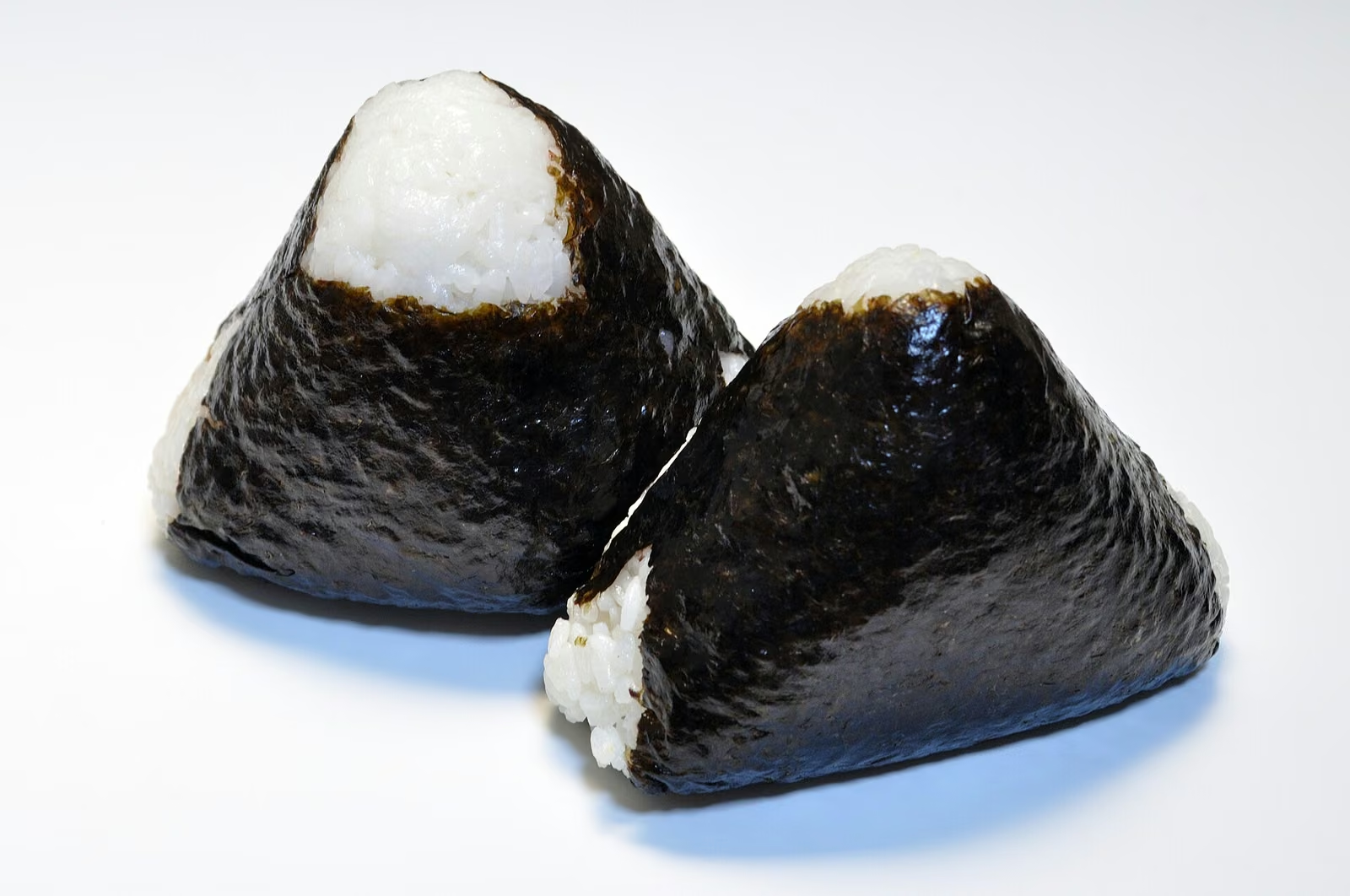 Onigiri (rice balls) provide steady-release complex carbohydrates plus salt, making them an ideal pre-hike breakfast or summit lunch. Photo: Wikimedia Commons (Ocdp, CC0)

2. During the Hike (Every 45–60 Minutes)
- Snack small and often: Rather than waiting three hours for a big summit lunch, eat 100–200 kcal every 45 to 60 minutes during short standing breaks.
- Keep snacks in your hip-belt pockets or shoulder pouches: If you have to take off your backpack to reach food, you will skip eating when it rains or the wind blows.
3. Within 30 Minutes After Descending
- Taking carbohydrates plus protein (such as milk, yogurt, a protein bar, or a hot meal at the trailhead) within 30 minutes of finishing speeds muscle glycogen recovery and reduces next-day soreness.
Choosing the Right Trail Snacks (Kodosho): Fast vs. Slow Fuel
The best trail food strategy combines fast-acting sugars (for immediate boosts on steep climbs) with sustained-release carbohydrates and fats (for steady all-day energy), plus salt/electrolytes to prevent cramping.
| Category | Digestion Speed | Best Examples in Japan | Pros & Cold-Weather Notes |
|---|---|---|---|
| Energy Gels & Jelly Pouches (in-Jelly, Amino Vital, sports gels) | Fastest (10–20 min) | Morinaga in-Jelly Energy (180 kcal), single-handed energy gels | Easy to swallow even when exhausted or nauseated; carries moisture too |
| Yokan (Sweet Red Bean Jelly) & Fruits | Fast to Medium (20–30 min) | Imuraya Sports Yokan (116 kcal, push-up wrapper), bananas, dried mango/figs | Does not freeze solid or crumble in winter; concentrated sugar + salt |
| Rice Balls (Onigiri), Bread & Baumkuchen | Medium (1–2 hr) | Convenience-store onigiri, sweet buns (anpan), dense baumkuchen | High satiety and steady glucose release; note: rice hardens in sub-zero cold unless kept inside your jacket |
| Balanced Nutrition Bars | Medium to Slow (1–3 hr) | Otsuka CalorieMate Block (100 kcal/bar), cereal bars | Lightweight, never spoils, includes vitamins/protein; requires water to wash down |
| Trail Mix (Nuts, Dried Fruit & Chocolate) | Slow & Sustained (2–4 hr) | Almonds, walnuts, cashews, raisins, cranberries, chocolate | Highest calorie density per gram (~500–600 kcal/100 g) |
 Yokan (sweet red bean jelly) packs dense carbohydrates into a compact bar that won't crumble in your pack or freeze hard in late autumn. Photo: Wikimedia Commons (Syced, CC0)

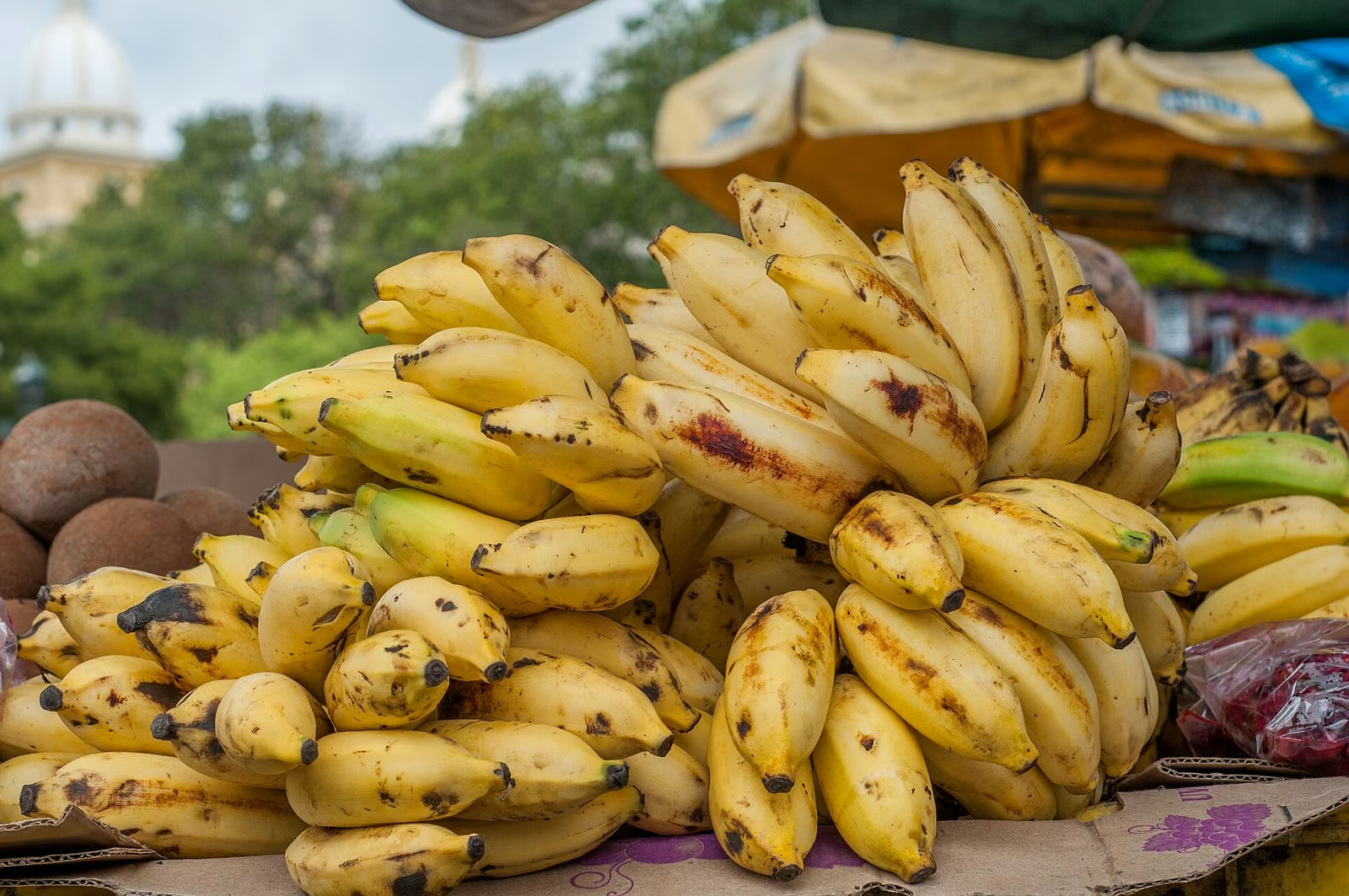 Bananas combine fast-absorbing fruit sugars with slower starch and potassium, making them a favorite pre-hike and early-trail snack. Photo: Wikimedia Commons (Wilfredor, CC0)

 CalorieMate blocks deliver exactly 100 kcal per bar (400 kcal per 4-bar pack) and serve as both daily trail fuel and emergency rations. Photo: Wikimedia Commons (Ocdp, CC0)

Special Tips for Late Autumn and Winter Hikes
In cold weather, your body burns extra calories just to stay warm, while several popular summer foods become difficult to eat:
- Onigiri and water bottles can freeze: If you carry rice balls in sub-zero temperatures, keep them in an insulated pouch or inside an inner jacket pocket close to your body.
- Chocolate and caramel bars turn rock-hard: Choose bite-sized chocolates, soft yokan, castella cake, or nuts that remain chewable in the cold.
- Carry a vacuum thermos with hot water: Sipping hot sweet tea, ginger湯, or instant soup warms your core directly while delivering fast glucose.
5-Step Recovery Protocol If You Hit the Wall (Sharibate)
If you or a hiking partner suddenly bonks on the trail, do not try to tough it out. Stop immediately and follow these five steps:
- Stop in a Safe, Sheltered Spot and Put On a Warm Layer: As soon as you stop moving, heat production plummets—and a hypoglycemic body chills twice as fast. Pull on a wind shell or fleece immediately.
- Take Fast-Acting Sugar First (Liquid or Gel): Chew glucose tablets, drink an energy jelly pouch (in-Jelly), eat yokan, or sip a sugary sports drink/hot cocoa. Liquid and gel sugars start raising blood glucose within 10 to 15 minutes.
- Follow with a Longer-Lasting Carbohydrate: Once the initial shakiness or nausea eases, eat a solid carbohydrate (half a rice ball, bread, baumkuchen, or a CalorieMate bar) so blood sugar doesn't crash again 30 minutes later.
- Rest for a Full 20–30 Minutes: Give your digestive tract time to absorb the glucose and deliver it to your bloodstream before resuming the climb.
- Drop Your Pace and Shorten Your Stride: Restart at 60–70% of your normal pace using small, flat-footed steps, and evaluate honestly whether to turn back or take an escape route if the summit is still hours away.
References and Official Links
- National Police Agency (NPA): Overview of Mountain Distress Incidents in 2025 (Reiwa 7) (PDF)
- Kanoya National Institute of Fitness and Sports (Prof. Masayoshi Yamamoto): Physiology and Energy Expenditure of Mountaineering (PDF)
- Japanese Society of Mountain & Nature Activity: Nutritional Strategies for Safe Mountaineering (PDF)
- Yamakei Online: Understanding and Preventing 'Sharibate' on the Trail
- Imuraya Official Product Info: Sports Yokan Azuki (40 g / 116 kcal)
- Morinaga Official Product Info: in-Jelly Energy (180 g / 180 kcal)
- Otsuka Pharmaceutical Official Product Info: CalorieMate Block