
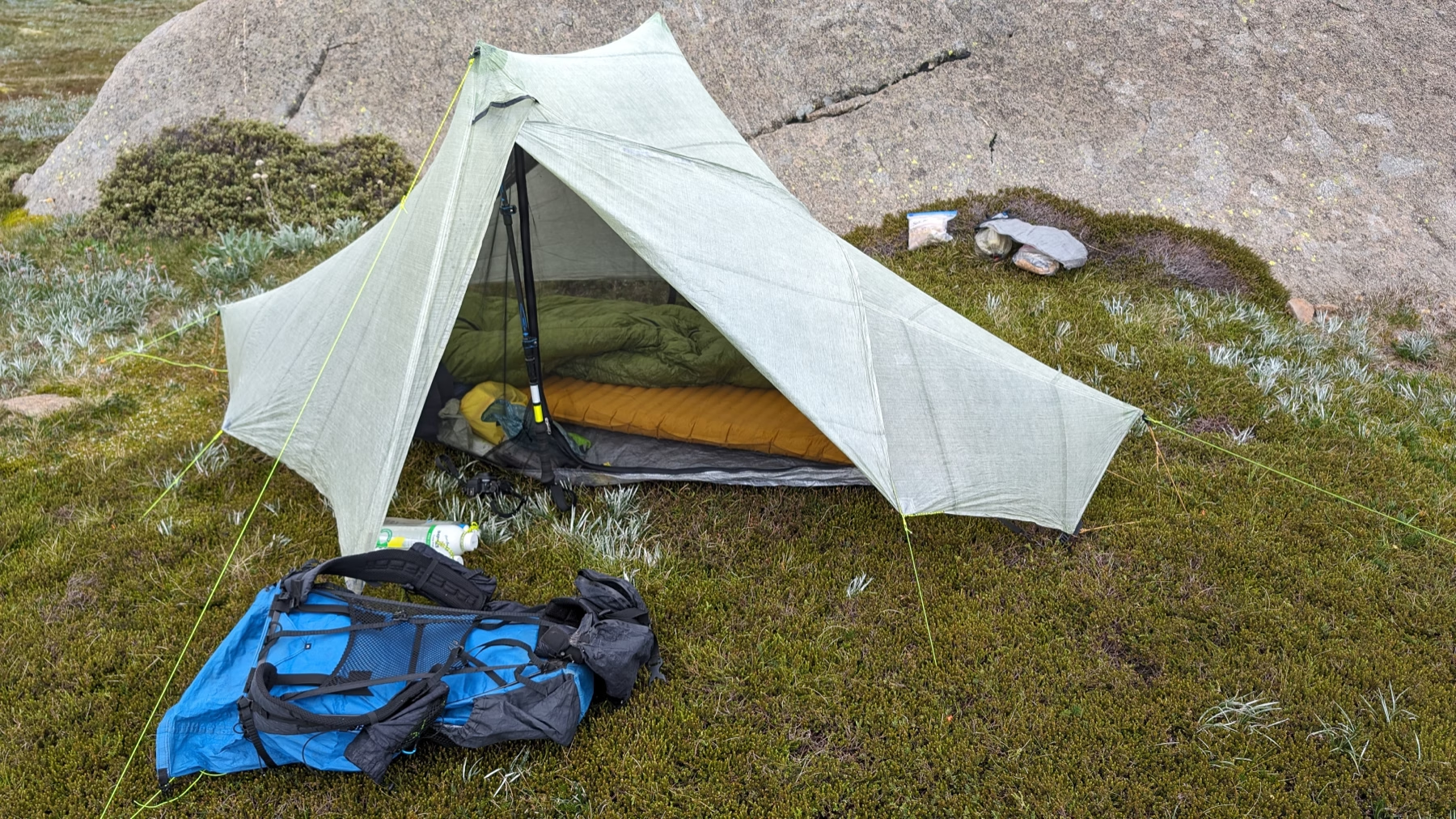
Photo: Andrew Shiva, Wikimedia Commons (CC BY-SA 4.0)

What Is a Zelt? Choosing and Using an Emergency Bivy Shelter for Hiking in Japan
An official-source guide to the Japanese 'zelt' (ultralight emergency bivy shelter): why Nagano Prefectural Police recommend carrying bivy gear even on day hikes, how a zelt differs from a tent, montbell U.L. Zelt specifications and ventilation warnings, and essential gear to pair with it.
This guide is compiled from mountain safety advisories published by the Nagano Prefectural Police and product specifications and user warnings published by montbell (checked October 24, 2026).
In Japanese mountaineering, a zelt (tsueruto, from the German word for tent) refers to an ultralight emergency bivy shelter.
Unlike a standard backpacking tent designed for comfortable overnight camping, a zelt is an emergency shelter carried to block wind, rain, and snow and preserve body heat when an unexpected delay—such as getting lost, an injury, sudden severe weather, or nightfall—prevents you from descending on schedule. In its mountain safety advisories, the Nagano Prefectural Police urge hikers to carry a headlamp, emergency bivy gear, warm insulation, and emergency food and water even on planned day hikes, noting that nightfall arrives early in the forest and rescue teams may take time to reach a distressed party.
What Is a Zelt?
A zelt is a compact, coated nylon canopy that folds down to the size of a small pouch or water bottle. According to montbell's product documentation for the U.L. Zelt:
- Intended purpose: Designed strictly as an emergency preparedness shelter, not as a sleeping tent for regular overnight camping.
- Weight and packability: Ultralight models weigh around 270 g (275 g including the stuff sack for the montbell U.L. Zelt #1122705), making it practical to carry alongside rainwear, a headlamp, and extra insulation on every hike.
- Multiple ways to deploy: In a sudden squall or forced halt, you can drape a zelt directly over yourself and your pack as an immediate windbreak, pitch it as an A-frame shelter using trekking poles and guylines (or suspend the ridge loops between trees), or unzip the entrance fully to use it as an emergency tarp.
When Do Hikers Need a Zelt?
A zelt helps prevent rapid heat loss and exhaustion in situations such as:
- Getting delayed or off-trail and being overtaken by darkness
- Stopping due to an ankle sprain, knee pain, or sudden illness
- Waiting out sudden heavy rain, snow, or gale-force ridge winds
- Sheltering an injured companion while waiting for mountain rescue
- Protecting against hypothermia when sweat or rain chills the body on an exposed ridge
When reporting a mountain distress call, the Nagano Prefectural Police specifically ask whether the party is carrying bivy gear (bibāku sōbi), along with battery levels, clothing colors, and health status.
How a Zelt Differs from a Standard Tent
| Feature | Zelt (Emergency Shelter) | Standard Mountaineering Tent |
|---|---|---|
| Primary Purpose | Emergency shelter during unplanned stops or bivouacs | Planned overnight sleeping |
| Structure | Non-freestanding; pitched with trekking poles, guylines, pegs, or tree trunks (dedicated pole sets sold separately) | Freestanding or semi-freestanding with dedicated tent poles |
| Waterproofing | Water-resistant coating and seam-taped ridge, not 100% waterproof like a full tent (montbell U.L. Zelt uses 10D Ballistic Airlight nylon ripstop with a 1,000 mm polyurethane coating) | Full rainfly and high-hydrostatic-head floor built for sustained storms |
| Ventilation | High airtightness from urethane coating requires constant ventilation; vents are designed not to close completely to prevent oxygen depletion (montbell) | Double-wall or breathable inner canopy designed for overnight sleep |
Example Specifications: montbell U.L. Zelt (#1122705)
- Material: 10-denier Ballistic Airlight nylon ripstop (1,000 mm polyurethane coating, flame-retardant treatment)
- Weight: 270 g (275 g total weight with stuff sack)
- Price: 22,000 yen (tax included, as of October 24, 2026)
- Note: Guylines and pegs required for pitching are sold separately. Always check the manufacturer's product page for current specifications.
Key Points When Choosing & Using a Zelt
1. Ventilation Is Mandatory
Because urethane-coated zelt fabric has high airtightness, proper ventilation is essential. On montbell zelts, the upper body vents and upper entrance vents are designed to remain partially open at all times to help prevent oxygen deficiency. In winter or low temperatures, condensation and frost can further reduce airflow—always keep vents clear and ensure adequate air exchange.
2. Carry Guylines and Pegs
A zelt canopy alone can be pulled over your head like a poncho shelter, but pitching it as a tent-shaped shelter requires guylines and tent pegs (plus trekking poles if no trees are available). Check that guylines and pegs are packed inside or alongside your zelt stuff sack before heading to the trailhead.
3. Practice Pitching Before an Emergency
Trying to unroll and pitch a non-freestanding shelter for the first time in darkness, wind, or cold rain is difficult. Unpack your zelt in a park or yard after purchasing it, practice rigging it with your trekking poles and guylines, and confirm that all cords and stakes are ready to use.
Essential Gear to Carry Alongside a Zelt
A zelt blocks wind and precipitation, but thin nylon provides no insulation on its own and does not insulate you from cold ground. Combine your zelt with:
- Two-piece rainwear (jacket and pants)
- Warm insulating layer (fleece or down/synthetic jacket; see Hiking Layering Basics)
- Headlamp and spare battery / power bank
- Emergency thermal sheet / sit pad and backpack to insulate yourself from the ground
- Guylines and pegs
- Emergency food and drinking water