

Photo: 1000dai, CC BY-SA 4.0, via Wikimedia Commons
10 Common Beginner Hiking Mistakes in Japan and How to Avoid Them
Ten common mistakes beginner hikers make in Japan—from starting too late and misreading map times to dehydration and missing the last bus—backed by National Police Agency mountain incident statistics.


The mistakes beginner hikers make on their first few outings are remarkably consistent. Nearly every seasoned hiker has experienced at least one of these early on:
- Starting late in the morning and watching the forest grow dark before reaching the trailhead
- Running out of water before the descent is over
- Developing painful blisters on the way down in brand-new boots
On a low mountain in fair weather, these slip-ups often end as nothing more than an exhausting lesson. Under slightly worse conditions, however, the exact same mistakes lead directly to mountain rescues.
According to the National Police Agency's Overview of Mountain Incidents in 2025 (Reiwa 7), Japan recorded 3,106 mountain incidents involving 3,568 people in 2025. By cause, the top four categories were:
| Rank | Cause of Incident | Share of Total |
|---|---|---|
| 1 | Lost way (route-finding error) | 33.9% |
| 2 | Slip (転倒, falling on the same level) |
18.2% |
| 3 | Fall from a slope (滑落) |
15.8% |
| 4 | Fatigue | 8.4% |
Here are the 10 most common mistakes beginner hikers make—grouped into Preparation, Equipment, and On the Trail—along with practical countermeasures to prevent them.
Preparation & Planning Mistakes
Mistake 1: Starting Too Late
Arriving at the trailhead around 10:00 or 11:00 AM after a leisurely morning train ride is one of the riskiest habits in hiking. Mountain weather is most stable early in the morning and tends to deteriorate in the afternoon as rising warm air builds clouds. In forested valleys, twilight sets in well before the official sunset time, and by autumn it can be pitch-dark under the canopy by 4:30 PM.
How to avoid it:
- Aim to start hiking by 7:00–8:00 AM (or even earlier on longer routes), and plan to be off the mountain by 3:00 PM.
- Work backward from your target finish time when choosing your morning train or bus.
Mistake 2: Treating Map Course Times as Including Breaks
Standard course times printed on topographic maps and hiking apps represent net walking time only. They do not include rest stops, lunch at the summit, photo breaks, waiting at narrow bottlenecks, or the slower pace of an unfamiliar trail.
If a map shows a total walking time of 4 hours, the actual elapsed time on the mountain will easily reach 5 to 5.5 hours once you add a 40-minute lunch break and a few 10-minute rests.
How to avoid it:
- Multiply the standard course time by 1.2 to 1.3 for a beginner pace, and add all rest and meal times separately on top of that figure.
Mistake 3: Skipping the Weather Forecast at Elevation
Checking only the city forecast for the nearest railway station can leave you completely unprepared on the ridge. Conditions at the summit differ dramatically from those in town:
- Temperature: Drops by roughly 0.6°C for every 100 m of elevation gain (about 6°C cooler at 1,000 m and 12°C cooler at 2,000 m).
- Wind: Exposed ridges have nothing to block the wind; each 1 m/s of wind speed reduces the perceived temperature by roughly 1°C.
Even if the valley floor is sunny and 20°C, a 1,500 m ridge with a 10 m/s breeze feels closer to 0°C.
How to avoid it:
- Check wind speed, precipitation probability, and freezing levels for the mountain elevation—not just the town at the base—and pack insulating layers and wind protection accordingly.
Equipment & Clothing Mistakes
Mistake 4: Wearing a Cotton T-Shirt as a Base Layer
Even on a cool day, hiking uphill produces far more sweat than everyday walking. Cotton absorbs moisture readily and holds it against your skin. Once you stop for a break at the summit or hit a breezy ridgeline, that wet fabric rapidly draws heat away from your body—a phenomenon known as post-sweat chill (汗冷え), which saps your energy and can trigger hypothermia even outside winter.
How to avoid it:
- Wear a quick-drying synthetic (polyester) or merino wool base layer from the skin out, including your underwear and socks. Save cotton shirts for changing into at the hot spring after you finish the hike.
Mistake 5: Wearing Brand-New Boots Straight Out of the Box
Heading out on a 4- or 5-hour mountain hike in boots that have never been worn outdoors is a recipe for heel blisters and bruised toes. New uppers and soles are stiff, and small pressure points that go unnoticed in a shop fitting become painful after thousands of steps on an incline.
How to avoid it:
- Break in new hiking boots by walking around town or on short park trails beforehand.
- Pair them with thick cushioned trekking socks, lace the instep and ankle hooks snugly before descending so your toes do not slide into the front of the boot, and carry hydrocolloid blister bandages plus athletic tape in your first-aid kit.
Mistake 6: Packing Either Too Much or Too Little
Beginners tend to fall into one of two extremes: stuffing a huge pack with every conceivable convenience item until the weight itself causes exhaustion, or heading up a mountain in sneakers with nothing but a smartphone and a single plastic bottle of water.
How to avoid it:
- Never cut safety essentials: rainwear (separate jacket and pants), a warm mid-layer, a headlamp, a mobile power bank, extra food, and sufficient water belong in your pack on every hike, regardless of the forecast.
- Trim non-essential extras (heavy camp cookware, multiple changes of clothes, bulky books) so a daypack stays within a comfortable weight range.
On-the-Trail Mistakes
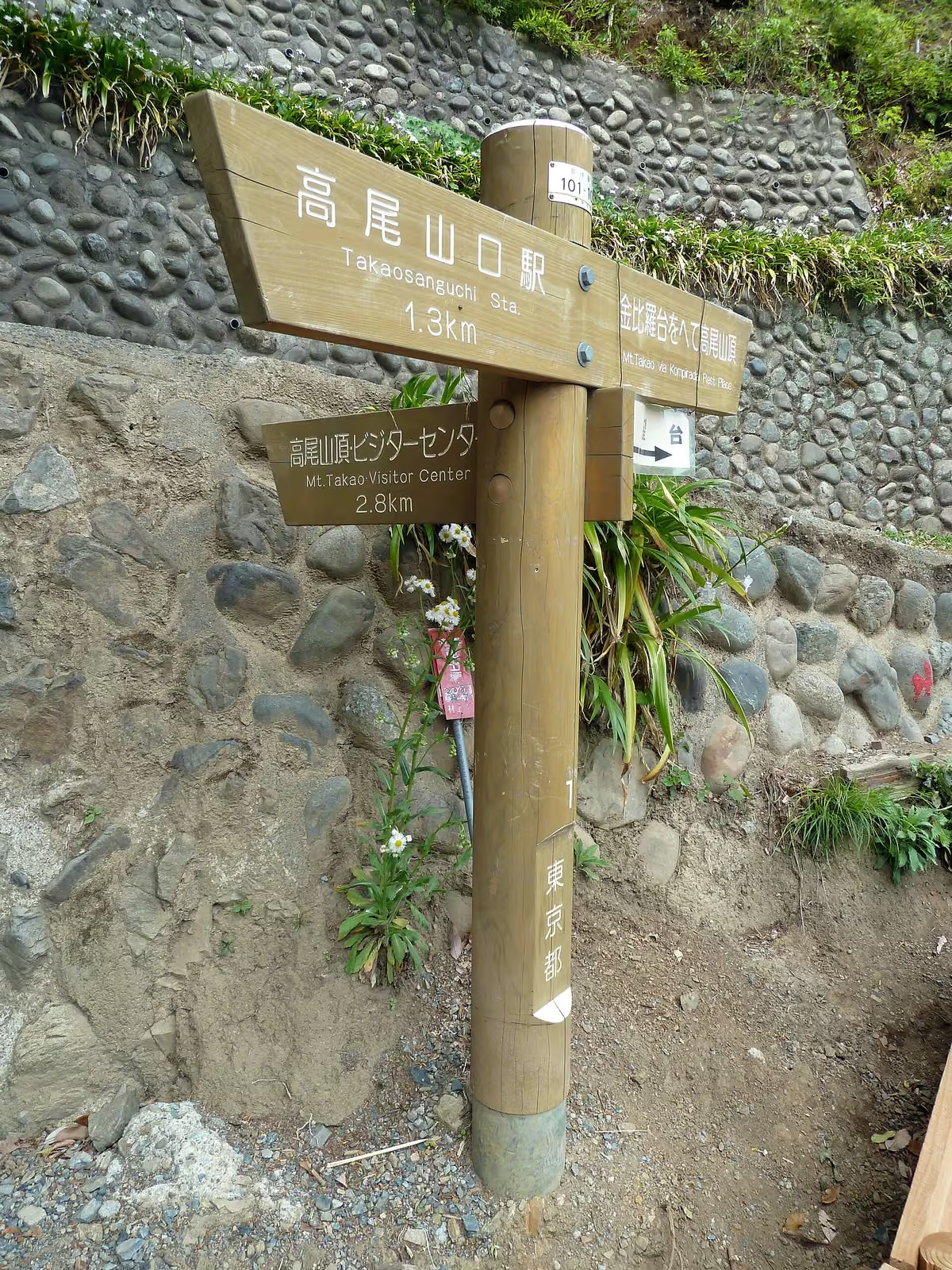

Mistake 7: Starting Out Too Fast
At the trailhead, your legs feel fresh and the excitement of the morning makes it easy to stride uphill at city walking speed—or to try keeping pace with faster hikers ahead of you. Within 30 minutes your heart rate spikes, your breathing turns ragged, and your leg muscles burn through their glycogen stores long before the summit.
How to avoid it:
- Begin the first 20–30 minutes at a deliberately slow warm-up pace where you can comfortably hold a conversation without gasping.
- Take shorter steps on steep grades rather than lifting your knees high.
Mistake 8: Waiting Until You Feel Thirsty or Hungry to Drink and Eat
By the time you feel strong thirst, your body is already mildly dehydrated; by the time your stomach growls and your legs feel heavy ("bonking" or シャリバテ), your blood sugar is depleted. Dehydration also increases the risk of painful leg cramps during the descent.
A useful hydration benchmark for mountain walking is:
$$\text{Fluid intake (ml)} \approx (\text{Body weight in kg} + \text{Pack weight in kg}) \times \text{Walking hours} \times 5$$
For example, a 60 kg hiker carrying a 5 kg pack for 5 hours needs roughly $65 \times 5 \times 5 = 1,625\text{ ml}$ (about 1.5 to 2.0 liters) of fluid during the hike, plus a small safety reserve.
How to avoid it:
- Take a few sips of water every 15 to 30 minutes before you feel thirsty.
- Snack on carbohydrates, nuts, or energy gels every 60 to 90 minutes rather than relying solely on a single lunch stop.
Mistake 9: Letting Your Guard Down on the Descent
Reaching the summit feels like the finish line, yet in mountain rescue statistics the majority of slips, falls, and twisted ankles happen on the descent. Tired quadriceps lose their shock-absorbing control, your bodyweight accelerates downward with gravity, and your eyes drift up from your footing once the trail seems easy.
Route-finding errors also spike on the way down: ridges fan out in multiple directions as you descend, making it easy to wander onto a logging track or a wrong spur ridge if you pass a junction without checking your map.


How to avoid it:
- Re-tie your bootlaces firmly at the summit before starting down so your feet cannot slide forward inside the boots.
- Keep your steps short, place the entire sole flat on the ground rather than striking hard on your heels, and step around wet tree roots and loose gravel.
- Check your GPS map app at every trail junction—and if the path feels unfamiliar, walk back uphill to the last confirmed signpost rather than scrambling down a steep slope.
Mistake 10: Failing to Check Return Bus Timetable and Escape Routes
Many trailheads in Japan are served by rural buses that run only a few times a day, with the final bus departing around 4:00 or 5:00 PM (and even earlier on winter schedules). Discovering at the trailhead that the last bus left 20 minutes ago—often in a valley with weak cell reception and no taxis—turns a successful hike into a multi-hour road walk in the dark.
How to avoid it:
- Look up and screenshot the return bus timetable (paying close attention to weekday vs. weekend/holiday and seasonal schedules) before leaving home.
- Identify shorter escape routes or ropeway options during planning so you can cut the hike short if your pace falls behind schedule.
Pre-Hike Prevention Summary
| Stage | Key Action |
|---|---|
| 3 days before | Check mountain-level weather and wind; download offline maps; screenshot return bus times |
| Night before | Charge smartphone and power bank to 100%; pack rainwear, headlamp, warm layer, food, and 1.5–2 L of water |
| Trailhead | Start by 7:00–8:00 AM; walk the first 20–30 minutes at an easy warm-up pace |
| During ascent | Drink every 15–30 minutes; eat a small snack every 60–90 minutes |
| Before descent | Re-tighten bootlaces; put on an extra layer while resting at the summit |
| During descent | Take short, flat-footed steps; verify every trail junction on your offline GPS map |