
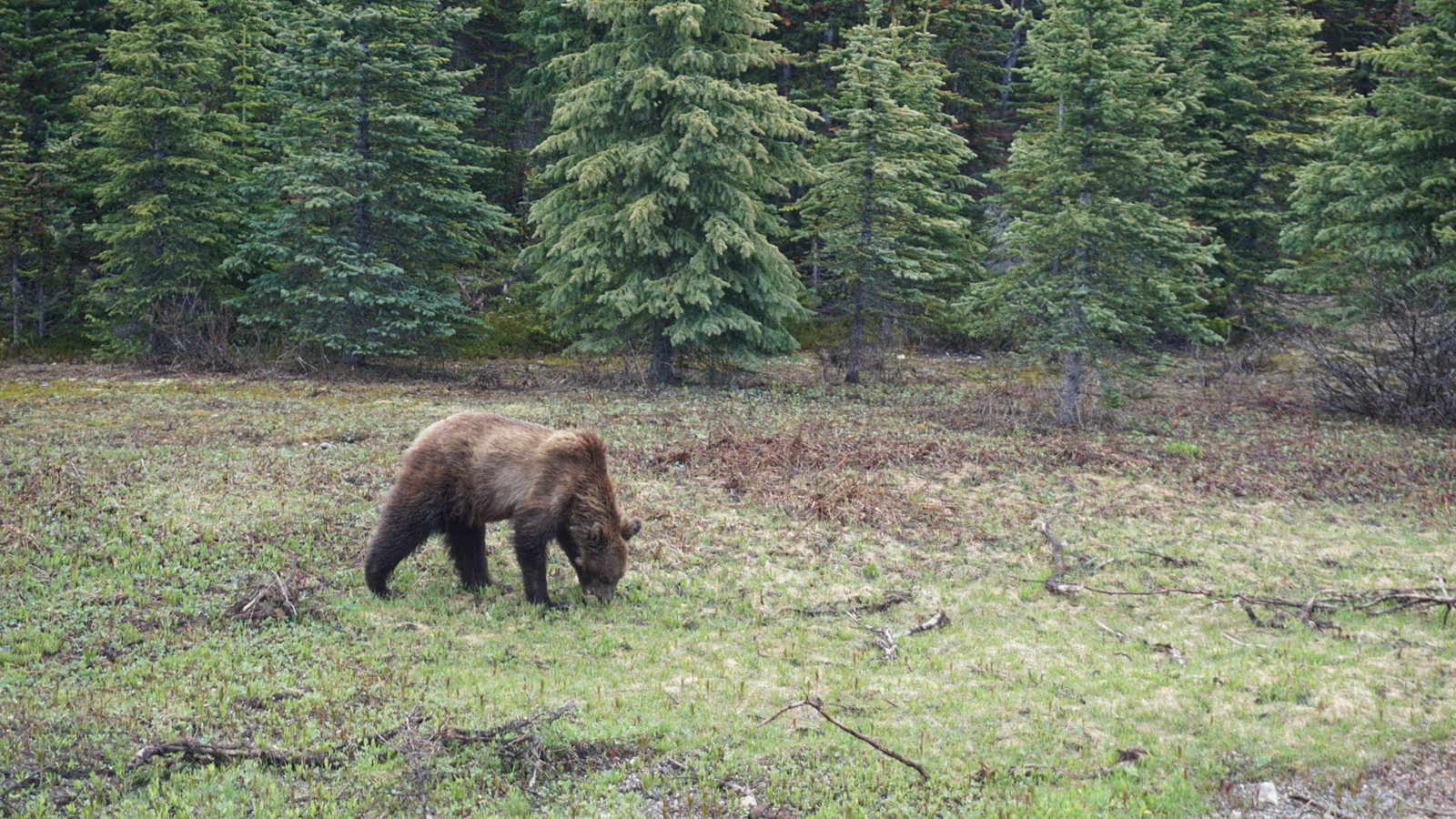
Photo by Bugabusu via Wikimedia Commons (CC BY-SA 4.0)
Bear Spray Buyer's Guide for Hiking in Japan: Spray Distance, Duration & Top 10 Models Compared
How to choose a reliable bear deterrent spray for hiking in Japan: key criteria (spray distance, spray duration, OC concentration, and holster carry), how to tell Hokkaido brown bear sprays apart from lighter Asian black bear models, and a 10-model comparison.
Carrying a bear deterrent spray has become standard safety practice on trails across Japan, from Ussuri brown bear (Ursus arctos lasiotus) habitat in Hokkaido to Asian black bear (Ursus thibetanus japonicus) ranges throughout Honshu and Shikoku. Yet when you browse outdoor shops or online retailers, prices range from around 5,000 yen to over 20,000 yen, and canister sizes and propellant systems vary widely.
This guide breaks down the four non-negotiable criteria for choosing a hiking bear spray, explains how to match a canister to the region you hike in, and compares 10 major models available in Japan—along with essential carrying, transport, and disposal rules.
4 Key Criteria When Choosing a Bear Spray
Not every pepper spray sold as "bear spray" or "outdoor defense spray" performs the same way in mountain wind and cold. Check these four specifications before buying.
1. Spray Distance: Aim for 5 Meters or More (9–12 Meters for High-Output Fog)
When a bear charges or approaches at close quarters, you need to create a dense barrier of capsaicin mist before the animal reaches contact range.
- Under 3 meters: Built for close-quarters human self-defense; requires waiting until a bear is dangerously close and leaves almost no margin for headwinds.
- 5 to 7 meters: Workable minimum for compact canisters carried on day hikes in Asian black bear territory, provided you factor in wind direction.
- 9 to 12 meters: Full-size high-pressure fogger canisters (such as Counter Assault, SABRE Frontiersman, UDAP, and Japan's domestic Kuma Ichimokusan), designed to deploy a wide cloud well ahead of a charging bear.
Remember that manufacturer distance ratings are measured in calm air. In a mountain headwind or crosswind, effective reach drops significantly—so choosing a model with extra distance margin is critical.
2. Continuous Spray Duration: At Least 5 Seconds
In an actual encounter, you will rarely expend an entire canister in a single long blast. Instead, you may need an initial warning burst followed by a second or third burst if the bear changes angle or continues advancing, or if a gust of wind blows the first cloud off target.
A continuous spray rating of at least 5 seconds (ideally 6 to 10 seconds) gives you enough capacity to fire multiple controlled 1- to 2-second bursts. Very small canisters rated for only 2.5 seconds leave almost no reserve after a single trigger pull.
3. Active Ingredient (Capsaicinoids / OC) and Propellant Performance in Cold Weather
Effective bear sprays rely on oleoresin capsicum (OC) derived from hot peppers, with major North American EPA-registered models and leading Japanese wildlife models formulated around 2.0% major capsaicinoids. When atomized into a fine fog or cone, capsaicinoids immediately inflame the mucous membranes of the eyes, nose, and upper respiratory tract—causing temporary blindness and intense coughing without permanent tissue damage.
Also check the propellant properties:
- Cold-temperature reliability: Above treeline or in spring and autumn mountains, ambient temperatures frequently drop near or below freezing (
0 °C). Look for canisters tested for cold-weather discharge (such as Counter Assault, Frontiersman, or HFO-1234ze/nitrogen blends). - Non-flammable formulations: Helpful both for safe storage and when disposing of an expired canister.
4. Dedicated Holster for Immediate 1–2 Second Draw
A bear spray stored inside your backpack is useless in a sudden encounter. Sudden sightings on forest switchbacks, along loud mountain streams, or in dense sasa bamboo happen in seconds—far too fast to take off your pack and unzip a pocket.
Always carry bear spray on the outside of your body where your dominant hand can draw it in 1 to 2 seconds:
- On your backpack's hip belt or shoulder harness
- Inside a dedicated belt holster or chest pouch
- Secured so the safety wedge cannot snag and pop off in brush, while still releasing smoothly with your thumb
When comparing prices, check whether a dedicated holster is included or sold separately (holsters typically cost 1,900 to 4,500 yen on their own).
Choosing by Region: Hokkaido (Brown Bear) vs. Honshu & Shikoku (Asian Black Bear)
Japan has two bear species with very different body sizes and ranges:
| Region | Species | Typical Adult Weight | Recommended Bear Spray Class |
|---|---|---|---|
| Hokkaido | Ussuri brown bear (Higuma) | 150–400 kg | High-output large canister (230–380 g) with 9–12 m range and 7–10 sec duration |
| Honshu & Shikoku | Asian black bear (Tsukinowaguma) | 40–120 kg | Standard hiking canister (230–320 g) with 9–12 m range, or compact/mid-size canister (160–380 g) for well-traveled day trails |
| Kyushu & Okinawa | (No wild bear populations) | — | Not required for local peaks |
For Hokkaido Trails and Deep Backcountry in Northern/Central Honshu
On Hokkaido peaks (such as the Daisetsuzan range, Shiretoko, Hidaka, or Shakotan) as well as deep backcountry routes in Tohoku and the Japanese Alps, prioritize maximum stopping power, spray cloud volume, and wind resistance over weight savings. Choose a full-size 230–380 g fogger rated for 9–12 meters and 6–10 seconds.
For Day Hikes and Trail Running in Honshu and Shikoku
Standard 230–320 g canisters (such as Kuma Ichimokusan, SABRE Frontiersman 234 mL, Counter Assault CA230, or UDAP 12HP) remain the gold standard for Honshu hiking. If the bulk or weight of a full-size canister would tempt you to leave it at home on a fast day hike or trail run, a lighter mid-size model (such as Police Magnum B-610 or B-609) is far better than carrying nothing—provided you understand its shorter range (5.5–6.0 m) and narrower spray pattern.
Top 10 Bear Sprays Compared for Hikers in Japan
The table below compares 10 widely available models across four categories: Max-Power (Brown Bear & Deep Backcountry), Hiking-Carry Balance (All-Around Mountain Standard), Close-Range / Multi-Use (Asian Black Bear & Compact), and Ultralight / Trail Run Backup.
| Model | Brand | Category | Approx. Price (JPY) | Weight / Volume | Spray Distance | Spray Duration | Holster | Active Ingredient & Notes |
|---|---|---|---|---|---|---|---|---|
| Counter Assault CA290 Stronger | Counter Assault | Max-Power (Brown Bear / Deep Mountains) | ~23,100 yen | 380 g | 10.5 m+ | ~9.2 sec | Nylon holster included | Red pepper extract + HFC-134a. High-capacity 10.2 oz model favored by Hokkaido hikers, anglers, and field researchers. |
| Frontiersman Bear Attack | RANGS JAPAN | Max-Power (Brown Bear / Deep Mountains) | ~19,800 yen | 300 g | ~12.0 m | ~6–7 sec | Dedicated holster case included | EPA-registered oil-based chili extract + HFO-1234ze/nitrogen propellant. Stable discharge down to -20 °C; non-flammable. |
| Frontiersman MAX Bear Spray (272 mL / 9.2 oz) | SABRE | Max-Power (Brown Bear / Deep Mountains) | ~13,200 yen | 345 g (272 mL) | ~12.0 m | ~7–8 sec | Included on holster-set SKUs | 2.0% major capsaicinoids. High-volume fogger deploying ~52 g per second for maximum barrier density. |
Kuma Ichimokusan (熊一目散) |
Bio (バイオ) |
Hiking-Carry Balance | ~14,080 yen | 275 g | ~10.0 m | ~10.0 sec | Dedicated holster included | 2.0%+ capsaicin + Bickford irritant; non-flammable propellant. Japan's first domestically manufactured bear spray built for both brown and black bears, with a 5-year shelf life from manufacture. |
| Frontiersman Bear Spray (234 mL / 7.9 oz) | SABRE | Hiking-Carry Balance | ~12,100 yen | 304 g (234 mL) | ~12.0 m | ~6–7 sec | Sold separately (~1,900 yen) | 2.0% major capsaicinoids. North American standard 7.9 oz canister balancing a 12 m reach with a manageable 304 g weight. |
| Counter Assault CA230 | Counter Assault | Hiking-Carry Balance | ~18,480 yen | 320 g | 9.0 m+ | ~7.2 sec | Sold separately | Red pepper extract + HFC-134a. The standard 8.1 oz sibling of the CA290, long trusted in Japan's mountain shops. |
| UDAP 12HP Pepper Power Bear Spray | UDAP | Hiking-Carry Balance | ~7,850 yen | 314 g (225 g net) | ~9.0 m | ~7.0 sec | Dedicated hip holster included | 2.0% capsaicinoids. Developed by grizzly attack survivor Mark Matheny; discharges a wide, dense fog barrier quick to deploy from its Griz Guard holster. |
| Police Magnum B-610 (8 oz) | Chuhatsu Hanbai (中発販売) |
Close-Range / Asian Black Bear | ~10,186 yen | 380 g | ~6.0 m | ~8.0 sec | Sold separately | 17% OC water-soluble mist jet. Narrower cone than North American foggers (less blowback in light wind), suited to Honshu forest trails. |
| Police Magnum B-609 (4 oz) | Chuhatsu Hanbai (中発販売) |
Ultralight / Compact | ~7,980 yen | 163 g | ~5.5 m | ~2.5 sec | Sold separately | 17% OC mist jet in a 163 g canister. Easy to clip to a running vest or daypack, though the 2.5-second duration leaves little reserve. |
| Pepper Standard TW-1000 (63 mL) | Karl Horneck | Ultralight / Compact Backup | ~5,500 yen | 85 g (63 mL) | ~4.0–5.0 m | ~15.0 sec | None | Ballistic liquid stream rather than a wide fog. Wind-resistant and featherweight (85 g), but requires precise aiming at the face—best treated only as an ultralight backup. |
(Prices and specifications reflect retail listings as of 2026; verify whether a holster is bundled with your specific SKU before purchasing.)
How to Use Bear Spray Correctly in an Encounter
According to the Ministry of the Environment's Bear Encounter Response Manual, how you react depends on the distance and behavior of the bear:
- If you spot a bear at a distance and it has not noticed you: Do not shout or run. Quietly back away while keeping the bear in view.
- If a bear notices you at medium range: Remain calm, face the bear without staring aggressively, draw your bear spray and release the safety clip with your thumb, and back away slowly. Never turn your back and run, which can trigger a chase response.
- If a bear charges or closes within spray range:
- Brace your stance, hold the canister with both hands if possible, and aim slightly downward (at an angle of roughly 10–15 degrees toward the ground in front of the charging bear).
- Bears charge with their heads low, and propellant pressure naturally lifts the expanding fog upward. Firing slightly downward creates a rising wall of pepper fog that the bear runs directly into.
- Fire in 1- to 2-second bursts rather than holding the trigger down until empty, keeping reserve spray in case the bear circles or advances again.
- Once the bear breaks off and retreats into the brush, leave the area immediately while watching your surroundings—do not stay to photograph the animal.
Crucial Warnings: Expiration Dates, Flights & Safe Disposal
1. Check the Expiration Date (Typically 3 to 5 Years)
Bear spray canisters hold pressurized propellant gas. Over several years, microscopic seal permeation gradually lowers internal pressure—meaning an expired canister may fail to reach its rated distance even if it has never been fired.
- Most imported North American canisters (Counter Assault, SABRE, UDAP) carry a 3- to 4-year expiration date stamped on the label or canister bottom.
- Domestic Kuma Ichimokusan carries a 5-year shelf life from manufacture.
- Check the expiration date every spring before hiking season begins, and never leave a canister inside a parked car in summer: cabin temperatures exceeding
50 °Ccan warp the valve or rupture the pressurized cylinder.
2. Strictly Prohibited on Airplanes (Both Carry-On and Checked Baggage)
If you are flying to Hokkaido (New Chitose, Asahikawa, Memanbetsu, Kushiro, or Hakodate) or to regional airports in Tohoku, note that bear spray cannot be brought onto any passenger aircraft in Japan—neither in carry-on luggage nor in checked baggage—under Ministry of Land, Infrastructure, Transport and Tourism (MLIT) dangerous goods regulations (high-pressure gas and irritating substances).
If your trip involves a flight:
- Rent a bear spray locally at trailhead visitor centers (such as Asahidake Visitor Center, Sounkyo Visitor Center, or Shiretoko Five Lakes / Rausu visitor centers) or Hokkaido outdoor shops.
- Or buy locally after landing and arrange ground shipping or local disposal before flying home.
- On trains and highway buses, always keep the safety wedge locked, seal the canister inside a protective case inside your luggage while in transit, and follow the carrier's hazardous-item rules.
3. Never Test-Fire Near People or Campgrounds, and Dispose of Expired Cans Safely
Even a tiny trace of 2% capsaicinoid spray lingering on your hands or clothing will cause severe burning if you touch your eyes or face. Never test-fire a canister near trailheads, parking lots, mountain huts, or campgrounds.
When a canister expires, do not puncture it indoors or toss a pressurized cylinder directly into household trash:
- Check your municipality's rules for pressurized spray cans.
- If local rules require emptying the canister before recycling, only discharge it outdoors in an isolated, windless spot while wearing protective goggles, thick rubber gloves, and a mask, spraying into a double-layered plastic bag packed with newspaper or absorbent cloth—or use a manufacturer/retailer disposal take-back service where available.
Summary: Prevention First, Bear Spray as Your Final Line of Defense
Bear spray is a last-resort defensive tool for close encounters—not a substitute for collision avoidance. Combine it with fundamental mountain bear safety:
- Check recent bear sightings registered with prefectural wildlife maps and trailhead visitor centers before your hike.
- Make your presence known with a bear bell, whistle, or conversation—especially near rushing streams, blind ridge corners, dense bamboo, and during dawn or dusk hours.
- Pack out all food scraps and scented trash in sealed bags so bears never associate hikers with food.
- Carry your bear spray in a quick-draw holster on your chest or waist from the moment you step onto the trail.