

Photo: Toshiyuki Ueda via Wikimedia Commons (CC BY-SA 4.0)
Wild Mushrooms on Autumn Hiking Trails: Poisonous Lookalikes (Tsukiyotake & Kaentake), Forest Law Rules & Bear Risks
Why you should never pick or touch wild mushrooms on Japanese hiking trails in autumn—covering MHLW food-poisoning data on Tsukiyotake and Kusaurabenitake, contact-toxic Kaentake (Podostroma cornu-damae), Forest Law Article 197 penalties, and off-trail bear encounters.
When hiking through beech (buna) and oak (mizunara) forests in September, October, and November, you will often see clusters of colorful wild mushrooms growing on decaying logs, tree roots, and leaf litter right beside the trail.
While photographing autumn fungi from the trail is one of the pleasures of the season, picking, eating, or even bare-handed touching of wild mushrooms on Japanese mountains carries three severe risks:
- Acute Food Poisoning and Contact Dermatitis: Poisonous species frequently grow mixed in on the very same log as edible ones, and smartphone photo-recognition apps cannot reliably tell them apart.
- Criminal Penalties Under Japan's Forest Act & Natural Parks Act: Taking mushrooms or plants without the forest owner's permission is a crime (shinrin setto / forest theft).
- Fatal Bear Encounters & Getting Lost Off-Trail: Stepping off the marked trail to look for mushrooms is one of the leading causes of autumn bear attacks and mountain rescues in Japan.
Here is what every autumn hiker needs to know based on official data from the Ministry of Health, Labour and Welfare (MHLW), the Forestry Agency, and the Ministry of the Environment.
1. Over 90% of Wild Mushroom Poisonings in Japan Happen in Autumn (Sept–Nov)
According to statistics from the Ministry of Health, Labour and Welfare (MHLW) Poisonous Mushroom Page and the MHLW Natural Toxins Overview, roughly 90% of all wild mushroom poisoning incidents in Japan occur between September and November, overwhelmingly involving mushrooms picked by amateurs and shared with family or friends.
The #1 & #2 Culprits: Tsukiyotake and Kusaurabenitake
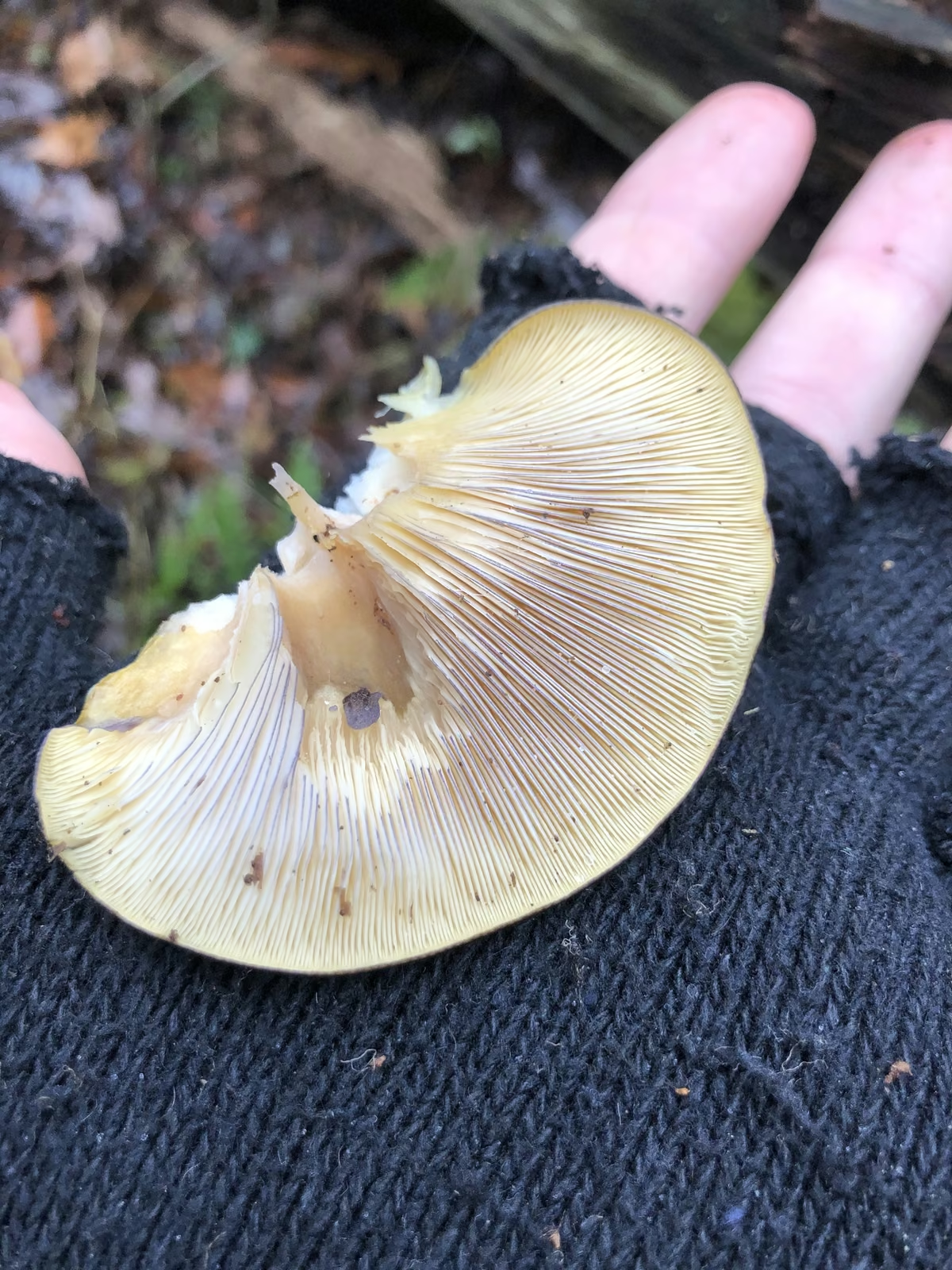
| Poisonous Species | Frequently Mistaken For | Symptoms & Onset | Official MHLW Profile |
|---|---|---|---|
| 1. Tsukiyotake (ツキヨタケ, Omphalotus japonicus) | Edible Hiratake (oyster mushroom), Mukitake, and Shiitake | Severe nausea, vomiting, and abdominal pain 30 minutes to 3 hours after ingestion (caused by illudin S). Young specimens sometimes lack the classic dark ring spot inside the stem base, fooling even experienced foragers. | MHLW Tsukiyotake Fact Sheet |
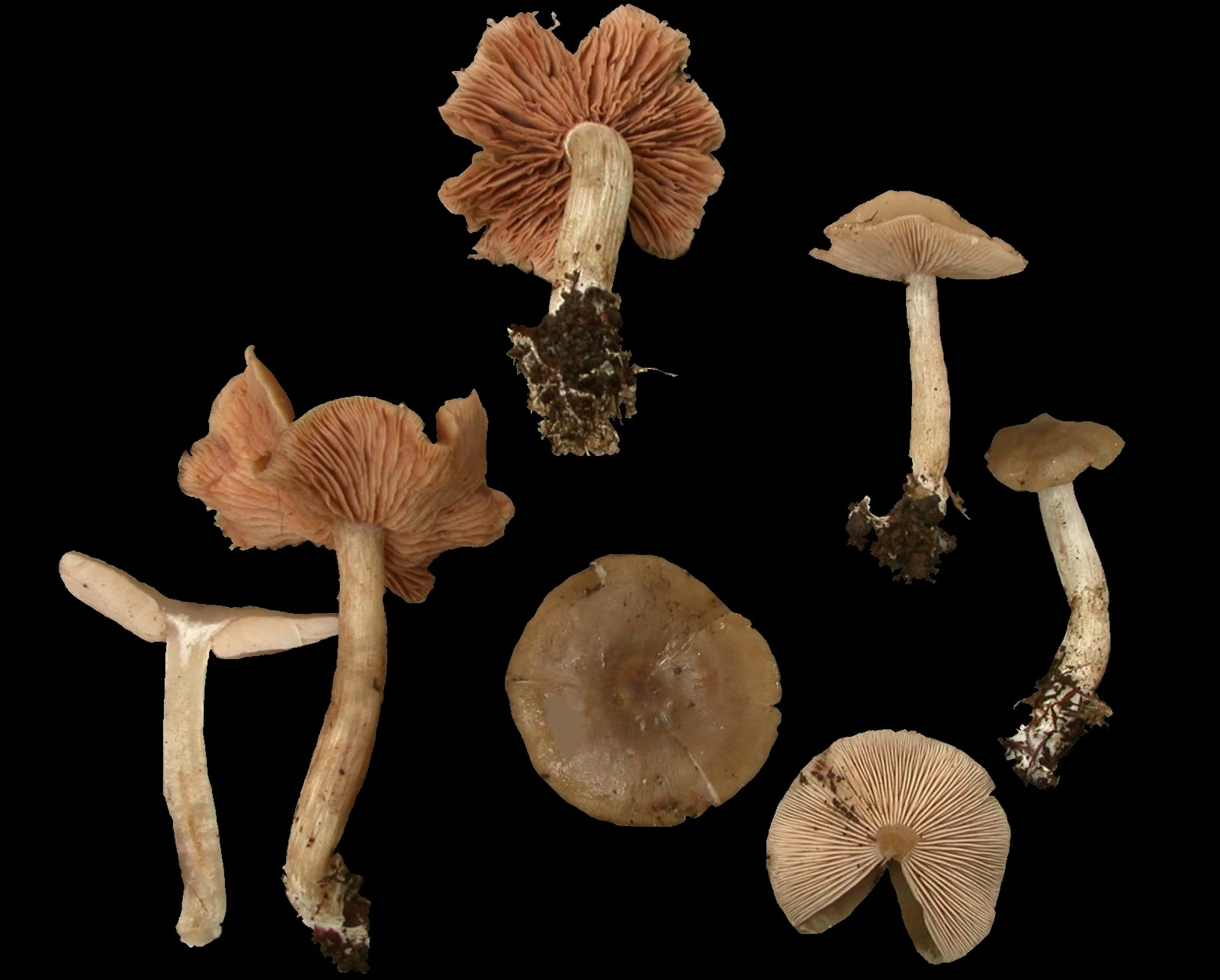
| 2. Kusaurabenitake (クサウラベニタケ, Entoloma rhodopolium) | Edible Urabenihoteishimeji and Hatakeshimeji | Vomiting, diarrhea, sweating, and pupil constriction 15 minutes to 3 hours after eating. | MHLW Kusaurabenitake Fact Sheet |
| 3. Kaentake (カエンタケ, Podostroma cornu-damae) | Coral fungi (Beninaginatake) or herbal cordyceps (Tochukaso) | Do NOT even touch with bare hands. Contains potent trichothecene mycotoxins; skin contact causes severe blistering dermatitis, and ingestion causes multi-organ failure, cerebellar atrophy, and death. | MHLW Kaentake Fact Sheet |
| 4. Dokutsurutake (ドクツルタケ, Amanita virosa) | Edible white mushrooms / Shirotamagotake | The "Destroying Angel": causes initial gastrointestinal distress (6–24 hrs), a false recovery period, and then fatal liver and kidney failure after 2–7 days. | MHLW Poisonous Mushroom Leaflet PDF |
2. Never Touch Bright Red Kaentake or Pure White Dokutsurutake on Oak Trails
Kaentake (カエンタケ): Spreading in Oak-Wilt (Nara-gare) Forests

In recent years, oak wilt (nara-gare, caused by ambrosia beetles) has spread across low- and mid-elevation hiking areas around Tokyo, Kansai, and Tohoku (Hyogo Prefecture Kaentake Warning). Because Kaentake thrives on the roots of dead oak (konara and mizunara) trees, hikers now encounter its bright red or orange finger-like stalks right beside suburban hiking trails and rest benches.
- Critical Rule: Unlike most mushrooms (which are only toxic if swallowed), Kaentake's cell sap causes severe skin inflammation simply from touching it. Keep children and dogs away, and never poke it with bare hands or trekking poles.

Why Folklore Myths and AI Photo Apps Are Dangerous
The MHLW and prefectural health centers (Tochigi Prefecture 2026 Mushroom Alert) emphasize that every single traditional folk rule about mushrooms is false:
- "Mushrooms that split vertically along the stem are edible" → False (Kusaurabenitake and Tsukiyotake stems split vertically too).
- "Dull-colored mushrooms or mushrooms eaten by insects are safe" → False (insects regularly eat deadly Amanita and Entoloma species).
- "Cooking with eggplant or boiling removes toxins" → False.
- "A smartphone AI camera app identified it as edible" → False (lighting, cap age, and rain wear alter mushroom appearance enough to cause fatal misclassifications).
3. Legal Rules: Picking Mushrooms Without Permission Violates Japan's Forest Act
Even if a mushroom is 100% edible, you are not allowed to harvest it on a hike.
- National Forests (国有林): While hikers are generally permitted to walk through National Forests without prior paperwork, the Forestry Agency explicitly prohibits harvesting wild vegetables (sansai), mushrooms, alpine plants, or rocks without authorization (Hokkaido Regional Forest Office Entry Rules & Shikoku Regional Forest Office Guide).
- Forest Theft Under Article 197 of the Forest Act (森林法第197条): Every mountain in Japan—whether National Forest, Prefectural Forest, municipal common land (iriaichi), or private timberland—has a legal owner. Under Article 197 of the Forest Act (e-Gov Law Database), stealing forest products (shinrin setto, which includes wild mushrooms and bamboo shoots) is punishable by up to 3 years' imprisonment or a fine of up to ¥300,000 (increasing to up to 5 years' imprisonment or a ¥500,000 fine Inside a Protected Forest / Hoanrin) (Yamagata City Unauthorized Harvesting Warning).
- National Parks (自然公園法): Inside Special Protection Zones and Special Zones of National and Quasi-National Parks, collecting plants or fungi is strictly regulated under the Natural Parks Act.
4. Stepping Off the Trail for Mushrooms Multiplies Bear & Getting-Lost Risks
According to the Ministry of the Environment Bear Injury Statistics (FY2025 Bear Injury Summary PDF & FY2026 Bear Injury Update PDF) and prefectural police rescue reports (Yamagata Prefecture Autumn Mountain & Mushroom Foraging Safety Alert PDF):
- Same Habitat, Same Season: In autumn, bears spend their days foraging intensively in beech (buna) and oak (mizunara) forests to fatten up on acorns and beechnuts before hibernation—the exact same trees where autumn mushrooms grow.
- Silent, Downward-Looking Movement: When someone steps off the marked hiking trail looking down at the ground for mushrooms, they stop making consistent trail noise, lose sight of their surroundings, and frequently stumble into a feeding bear at point-blank range—or slip down a steep leaf-covered gully out of sight of the trail.
The 4 Golden Rules for Autumn Hikers
- Look and Photograph Only—Never Pick, Eat, or Bare-Hand Touch Wild Mushrooms.
- Never Step Off the Marked Trail into the surrounding forest floor.
- Carry a Bear Bell and Bear Spray when walking through autumn beech and oak forests.
- If Anyone Eats a Wild Mushroom and Feels Unwell: Induce vomiting if conscious, save a sample or photo of the remaining mushroom, and seek emergency medical care immediately.